Wood dowels: simple precision for longer-lasting furniture
Wood dowels are regaining relevance as a technical solution for clean, strong joints compatible with more efficient production processes.
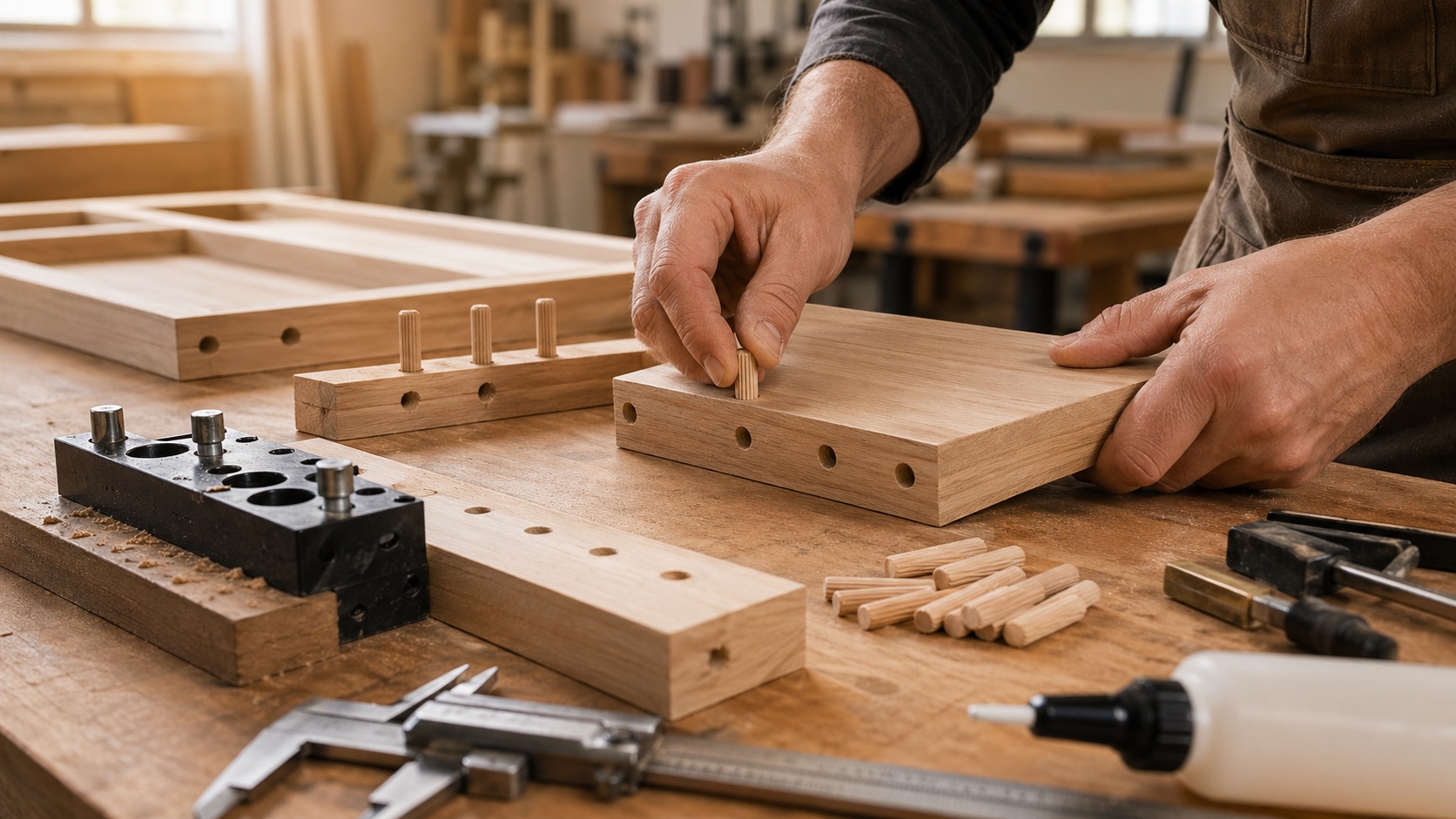
In the furniture industry, some solutions may appear too simple to deserve a central place in technical discussion. Wood dowels are a good example. Small, affordable and familiar to generations of woodworkers, these cylindrical joining components are receiving renewed attention in a market that is looking for longer-lasting furniture, cleaner processes and construction systems that combine industrial precision with craft flexibility. The relevance of the topic does not come from an isolated trend, but from a broader debate about how furniture is assembled and how its performance can be improved during use. As quality, repairability and sustainability become more important, the joint between parts becomes a critical point again. A board may have a good finish, a wood species may be well selected and a design may be attractive, but if the joint fails, the whole product loses value. This is where wood dowels offer a technical answer that deserves to be reconsidered. From a structural perspective, the dowel has a clear role: to align, reinforce and increase the contact area between two pieces. When installed correctly, it helps distribute stress and improve joint stability without relying only on visible screws, metal brackets or improvised adhesive application. In panel furniture, chairs, tables, shelving, frames, doors and ready-to-assemble modules, this capability is especially valuable. Precision defines the success of the system. A misplaced dowel, an off-center hole or an incorrect drilling depth can create misalignment, looseness or tension that appears later in everyday use. For that reason, the evolution of drilling jigs, multi-boring machines, CNC centers and marking systems has made dowels much more compatible with current production methods. What once depended heavily on manual experience can now be integrated into repeatable processes, with controlled tolerances and a lower margin of error. There is also an aesthetic advantage. Dowel joints can reduce visible hardware and preserve cleaner surfaces. In furniture where wood, veneer or decorative boards are the main visual elements, avoiding exposed fasteners improves the perception of quality. This matters in contemporary design lines, where visual continuity and constructive sobriety are valued. The final user may not identify the joining system, but will notice whether the furniture feels solid, stable and well resolved. In production terms, dowels can add efficiency when they are part of a planned system. Standardized drilling, appropriate adhesives, assembly pressure and moisture control can speed up mounting and improve repeatability. For small workshops, precise jigs can raise quality without requiring excessive investment. For medium and large factories, mechanized drilling allows dowels to be integrated into serial production or flexible manufacturing. Sustainability also places dowels in an interesting position. As wood-based components, they can serve as an alternative or complement to metal systems in certain applications. When joints are designed with repair or disassembly in mind, they can help extend the useful life of furniture. The point is not to present dowels as a universal solution, but to recognize their potential within a wider strategy of waste reduction, maintenance and responsible material use. The challenge lies in correct specification. Not all dowels behave the same way: diameter, length, wood species, fluting, adhesive absorption, moisture content, drilling precision and the material being joined all matter. Particleboard, MDF, plywood and solid wood can respond differently. Technical training is therefore essential to avoid failures caused by overconfidence in a component that seems simple at first glance. The future points toward a smarter integration between traditional joints and industrial processes. Dowels can coexist with demountable connectors, concealed hardware, high-performance adhesives and digital machining. Rather than competing with technology, this classic solution can benefit from it. A well-designed dowel system allows manufacturers to work with greater precision, reduce corrections in the workshop and improve the consistency of the finished product. For Latin America, where craft workshops, serial furniture producers and a diverse wood and board supply chain coexist, dowels represent a practical opportunity. They are accessible, familiar and adaptable, but they require method. Their value is not only in the low cost of the component, but in the quality they can add when they are part of a well-planned production design. At a time when furniture is more demanding and consumers are more attentive, the strength of a piece may depend on an almost invisible joint. In that quiet technical role, wood dowels are proving their relevance again.