If trees compete for light, how do the smallest ones survive in the forests?
In older forest masses, not only the height of these plant specimens is influenced, but also the efficiency in the use of light. A new Japanese study explains why some small trees can live in the shade of larger species.
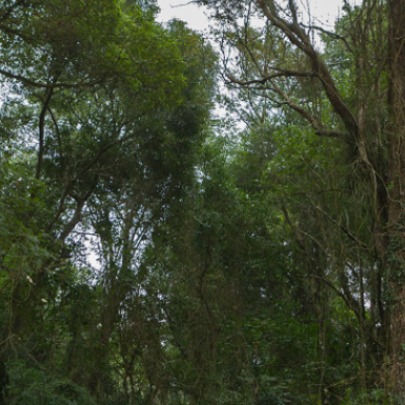
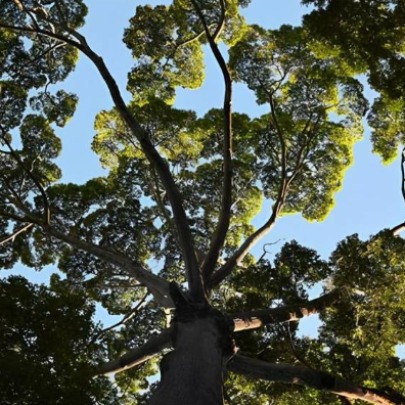
Size does matter, at least in the woods. Taller trees have access to a greater amount of sunlight, so shade becomes an inhospitable environment for smaller vegetation. However, a new study, published in the Journal of Ecology, reveals that in older groups there may be species that are more tolerant to the lack of light. Researchers from Kyoto University (Japan) have undertaken the challenge of understanding how trees of different heights coexist in mature forests. To do this, they had to quantify the competition for light between the specimens although their complex structures made their evaluation difficult. According to the first author of the study and researcher at the Japanese institution, Yusuke Onoda, the competition for light between trees is usually described as an evolutionary arms race, but in mature forests, trees of very different sizes successfully coexist, he points out. Greater efficiency in the use of lightThe team chose to analyze the relative growth rate of the trees. –the speed at which they grow in relation to their size– and divided it into two important factors: the efficiency of light interception and its capacity for use. To test their experiment, the experts mapped the crown shapes and 3D light profiles of each tree in 12 forest plots of various ages, totaling 2,000 individual trees from 50 different species. The results showed how competition for light quantitatively drives forest succession. In younger forests, taller trees have a greater advantage in light capture, forcing rapid stratification by height. However, in older stands, small plants are shade-tolerant because their light consumption is more efficient, allowing them to thrive. This study reveals the hidden mechanisms of forest succession and offers new insights into how trees cope with competition for light. In addition, they establish a new principle that explains how forests change over time. Now, researchers are applying this approach to other forest sites of different ages and climate zones.