If you see a black bag tied to a tree, we will tell you what it means and why it is important
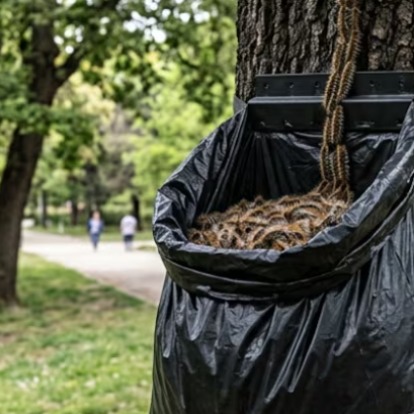
If youve ever walked through a square or a tree-lined street and come across a black bag tied to the trunk of a tree, it probably caught your attention. Many think that it is garbage or some maintenance work, but the reality is very different: these bags fulfill a key function in caring for the environment.
What are black bags used for on trees? Far from being a simple waste, the black bag is an ecological trap that is placed when the tree is being attacked by the pine or oak processionary caterpillar (Thaumetopoea pityocampa and Thaumetopoea processionea). These insects, increasingly common in different regions, represent a real danger due to their stinging hairs, which can cause severe irritation to the skin, eyes and even respiratory problems, both in people and animals. The system is simple but effective: a ring or band is placed next to the bag that guides the caterpillars inside. Once inside, they become trapped and die from the heat and dehydration. This prevents them from continuing to spread and their toxic hairs from being dispersed throughout the environment. Why is it dangerous to touch these trees? The real problem with the processionary caterpillar is not only its presence, but the thousands of microscopic stinging hairs that cover its body. When they feel threatened, they release these hairs into the air, and the toxin they contain (thaumetopoein) can cause everything from intense itching and rashes to eye inflammation and respiratory complications, especially in allergic people. Therefore, the black bag also works as a warning sign: if you see one, it is best not to approach or touch the tree, especially at times of the year when the caterpillars are most active. This is recommended by the European Food Safety Authority (EFSA), which warns about the risk of dispersion of toxic hairs. The risk for pets and children: why you have to be attentive Pets, especially dogs, often approach trees or debris they find on the ground out of curiosity. Contact with the stinging hairs can cause serious injuries, especially if they lick the bark, the earth or the caterpillars themselves. Boys are also at risk: they are often attracted to pockets in the branches or traps in the trunk. A simple touch can lead to itching, rashes, eye irritation or respiratory problems. A key fact: the stinging hairs remain active even after the caterpillars die. Therefore, the danger does not disappear immediately and may remain on bark, dry leaves or nearby soil. Control tasks must be carried out with specific protocols to prevent toxic particles from dispersing. Black bags in trees fulfill a much more important function than it seems. Not only do they help control the processionary caterpillar infestation, but they also warn of a real health risk. If you see one, keep your distance and avoid contact: its the best way to protect yourself and those around you.