Interzum Bogotá 2026: a trade fair as a control room for an industry that can no longer "improvise"
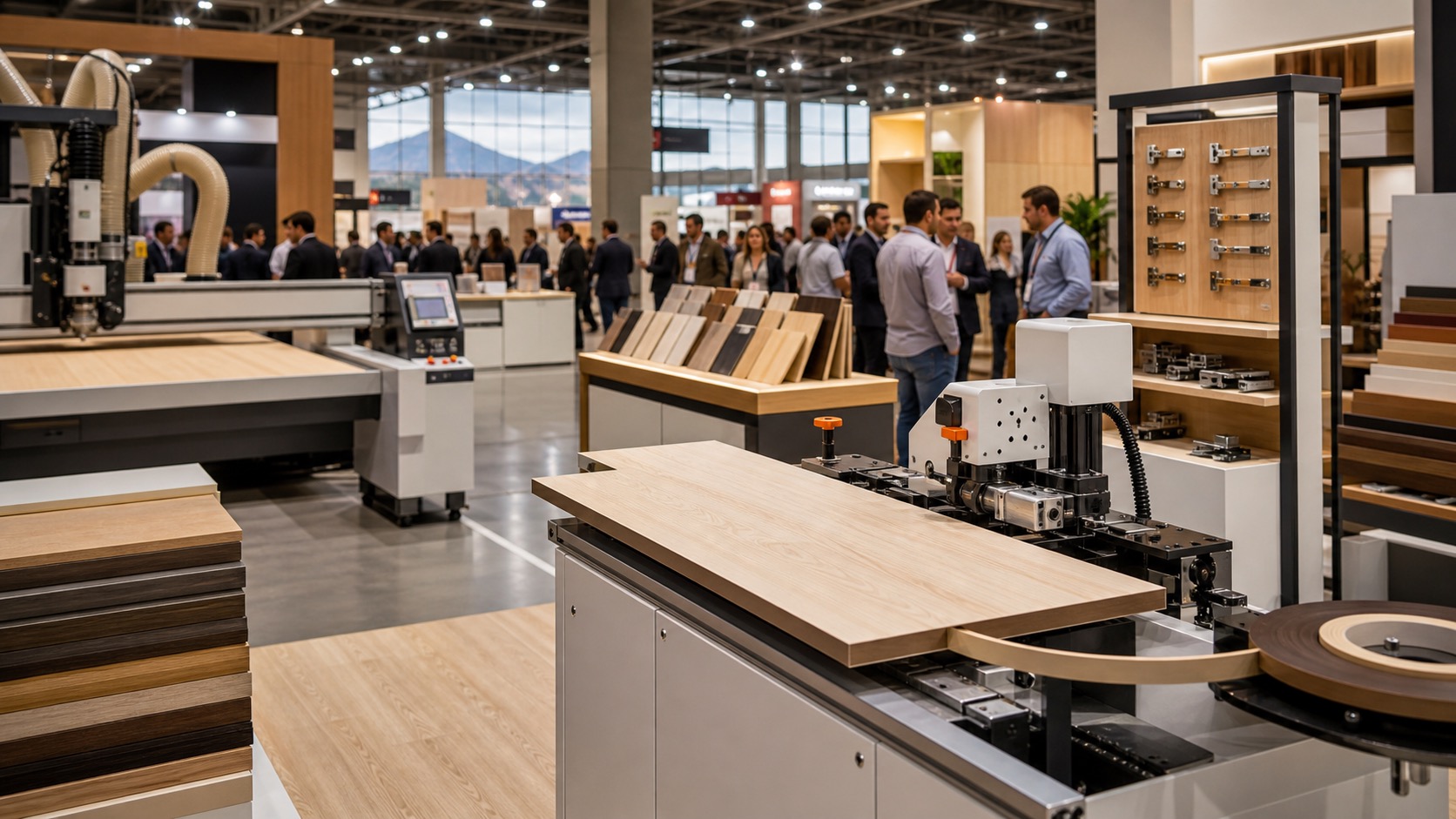
With the 2026 edition at Corferias (May 12-15), the wood and furniture sector arrives with a clear agenda: real productivity, process control and increasingly demanding surfaces. More than a showcase, the event acts as a thermometer of what has become essential to compete-consistent edging, fittings as systems, practical digitalization and a supply chain that now demands traceability.
In furniture manufacturing, there is an uncomfortable truth: the end customer does not see the drawings, the nesting, or the setup. They see the edge. They feel the closing motion. They judge gloss, texture and the smell of an interior. And they decide in seconds whether something is "well made." That is why, as a market matures, competition shifts from design or price toward consistency. Interzum Bogotá 2026, scheduled for May 12-15 at Corferias, arrives right at that point: a moment when the region is pushing toward more industrialized processes, while still living with typical shop-floor bottlenecks. Looking at a trade fair as a brand catalog misses the most important layer. What a sector event really offers is a decision map: which stations become critical, which variables can no longer be "fixed with craftsmanship," which investments pay back by reducing rework, and which practices are turning into standard operating procedure. In 2026, that map can be summarized in one sentence: the industry can no longer improvise. It needs method. ## The cycle shift: from craft to measurable process Woodworking and furniture production will always have a craft dimension. But today's demand is pushing toward a model where each part must come out right the first time, because rework is increasingly expensive-financially and operationally. It is not only labor: panels, edgebands, adhesives, logistics and installation delays all compound the cost of mistakes. That is why the conversation has moved toward "unsexy" but decisive variables: - Moisture content measured and recorded, not guessed. - Tolerances verified, not eyeballed. - Machine parameters that can be repeated, not "operator-dependent." - Dust and cleanliness treated as quality factors, not only safety factors. When these variables are stabilized, two things happen: waste drops and predictability rises. And predictability is margin. ## Edging: the most visible bottleneck If one station concentrates reputation and risk, it is edge banding. A part may be perfectly cut and machined, but a visible glue line, delamination or marks destroy the outcome. Edging combines chemistry (EVA, PUR), heat, pressure, cleanliness, scraping and polishing. It is also an operation with constant change: different thicknesses, different edgebands, different surfaces. That is why edging has become a strategic bottleneck. When it cannot keep up with cutting and CNC, flow breaks: parts pile up, handling increases, damage grows, complaints rise. The industrial response usually follows three paths: 1) Reduce changeovers with presets and repeatable "recipes." 2) Improve thermal consistency and cleanliness to stabilize the glue line. 3) Capture basic data (stops, parameters, consumption) to identify root causes. The paradox is that many gains are not "more speed," but less variation. The quality jump happens when the edge stops being a lottery. ## Fittings and components: from accessory to system Another strong trend is the shift from fittings as standalone items to fittings as systems. In kitchens, closets and contract furniture, fittings define user experience: smoothness, noise, alignment, load and lifecycle. They also define factory logistics: drilling compatibility, assembly time, torque discipline and repeatability. This changes buying criteria. You are not just buying "a hinge." You are buying behavior, a standard and a warranty promise. In a context where skilled labor is scarce, systems that simplify assembly and reduce error gain value. ## Surfaces and materials: design that carries production risk Contemporary interiors push more diverse decorative surfaces: deep mattes, synchronized textures, high-performance laminates, anti-fingerprint finishes and intense colors. The issue is that every new surface brings new shop-floor engineering: heat sensitivity, adhesive behavior, scratch risk, cleaning response and compatibility with edge banding and sealers. As a result, manufacturers increasingly need: - More systematic internal testing (scratch, adhesion, cleanability). - Adhesive and temperature "recipes" linked to each surface. - Better handling and packaging discipline to avoid marks. When a surface becomes brand language, surface defects become a commercial cost. ## Practical digitalization: fewer buzzwords, more control "Industry 4.0" can sound distant. But one kind of digitalization is already arriving: the kind that reduces mistakes and speeds up learning. It is not about screens; it is about practices: - Work orders with associated parameters (material, edgeband, adhesive, tooling). - Stop and cause logging (to attack the few issues that drive most lost time). - File versioning and change control (to avoid producing from old drawings). - Simple performance dashboards (lightweight OEE, scrap, rework). Factories that measure learn faster. And those that learn faster compete better. ## Regional impact: productivity, talent and supply stability Interzum Bogotá also matters for what it enables beyond the halls: investment conversations, training, and sourcing. The region shares structural challenges-cost of capital, supply variability, and technical training gaps. In that context, smart investment is not "buying the newest." It is buying what reduces uncertainty. That includes machines, yes. But it also includes method: moisture standards, maintenance routines, cleaning discipline, internal specifications and practical training. ## What comes next: traceability and verified circularity Sustainability will remain central, but with a higher bar: evidence. In wood and furniture, circularity becomes real when durability improves, waste drops, repair becomes easier, and performance is documented. Traceability shifts from narrative to commercial requirement. For manufacturers, that means a mindset change: every part that leaves the plant is also information. Those who manage that information well-without useless bureaucracy-will have an edge. ## Editorial close A trade fair does not solve an industry's problems. But it does reveal which problems can no longer be ignored. In 2026, the message between the aisles is clear: Latin America's wood and furniture sector is entering a stage of industrial maturity. In that stage, the differentiator is not only designing well. It is producing well-every time. With method, control and a value chain that can sustain quality without improvisation.