
Water-based polyurethanes on wood: performance and repeatable finishing
Finishing a wood piece is, in practice, its first line of engineering. Whether the substrate is solid wood, veneered MDF, or an edge-glued panel, users judge with their hands and with light. A finish that marks easily, scratches too fast, or burns at edges is not only an aesthetic issue; it is a process and specification issue. In that context, the shift toward water-based coatings is not a trend for its own sake. It reflects three pressures at once: higher performance expectations, the need for more repeatable industrial outcomes, and shop environments seeking to reduce solvent odor and exposure.
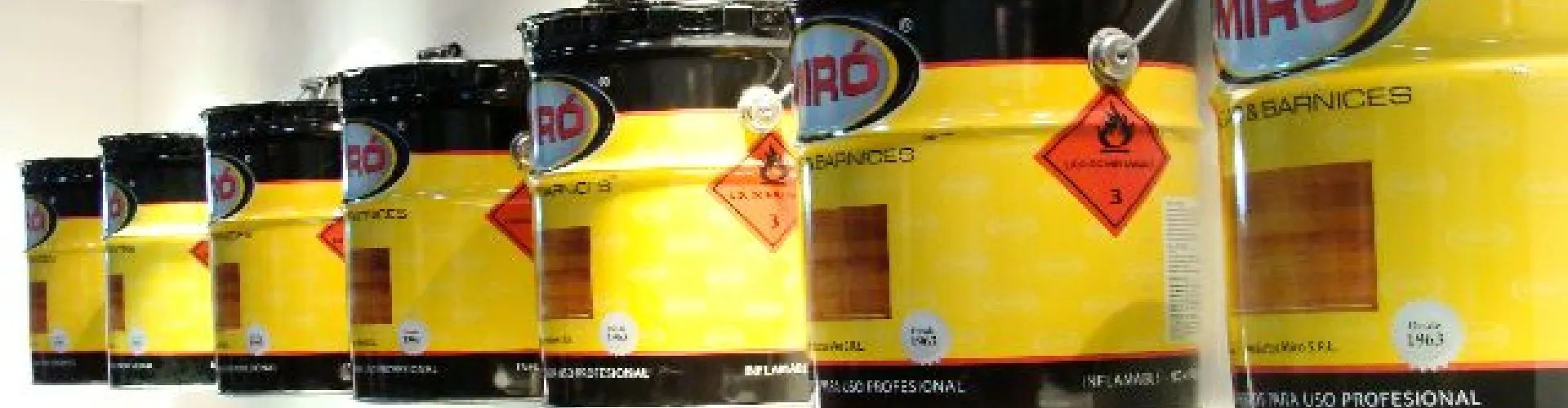
Productos MIRO SRL (Miró Lacas y Barnices) has manufactured coatings for wood care and enhancement since 1963. In its public VETAS profile, the company describes a technology path that includes polyurethane formulations, catalyzed lacquers, UV-curing lacquers, synthetic lines, and later water-based developments for floors and furniture, evolving into lassures and water-based lines with UV filters. In its current catalog, one product captures that transition clearly: Hidrolake for wood, gloss (1817), a water-based polyurethane positioned for high-resistance finishing.
This article is not about selling a can. It is about what technically changes when a shop or factory adopts a water-based polyurethane, which process variables matter, and why finishing has become a competitiveness lever.
1) Why water-based polyurethane is not "the same" as traditional varnish
In wood coatings, final performance depends on the film: hardness, flexibility, adhesion, and long-term stability. Modern water-based polyurethanes aim for a balance that is not trivial:
- Scratch resistance for high-touch surfaces.
- Elasticity under impact so the film resists cracking.
- Gloss stability (gloss makes every defect visible under grazing light).
- Compatibility with different substrates and sealers.
MIRO describes Hidrolake as "water-based polyurethanes, without solvent or odor" and highlights scratch resistance, impact elasticity, easy application, and fast drying. The industrial interpretation is straightforward: lower odor is not enough if the film underperforms; but when it performs, it unlocks process advantages in production and installation environments.
2) Water-based systems still demand discipline: the substrate rules
A common misconception is that a "modern" product compensates for poor preparation. In water-based finishing, preparation becomes even more visible because the film is unforgiving to defects:
- Correct sanding: gloss magnifies scratch patterns.
- Cleanliness: MDF/wood dust creates nibs and destroys gloss.
- Pore control: depending on the species, a base/sealer may be needed (MIRO suggests a prior water base to "close pores" and reduce consumption).
The rule is simple: a coating reproduces what it finds. Good substrate work makes the finish shine; poor substrate work gets amplified.
3) Multi-coat application: film build, curing, and repeatability
MIRO presents a practical sequence: apply on well-polished wood (or after a pore-closing base) and finish with three to four coats of Hidrolake (gloss, semi-matte, or matte). That "manual-style" guidance is load-bearing: performance does not come from a single heavy coat; it comes from controlled film build.
From a process perspective, what tends to matter is:
- Recoat window: too soon can trap moisture and cause haze; too late can reduce intercoat bonding.
- Coat thickness: too heavy increases sags and defects; too light increases cycle time.
- Environmental conditions: temperature and humidity drive dry-to-touch and cure behavior.
Once standardized, finishing stops depending on a single "master finisher" and becomes repeatable production.
4) Where performance is truly tested: scratches, impacts, and maintenance
In furniture, finishes are tested in real scenarios: hardware abrasion, kitchen objects, daily cleaning, household chemicals, and micro-abrasion. MIRO's "Surfaces" page lists applications ranging from all kinds of furniture to floor protection, wood enclosures, tongue-and-groove ceilings, stairs, decks, and more. That breadth signals an approach: coatings tailored for multiple use contexts.
Technically, finish selection should start from the use case:
- Kitchen tops and tables: scratch resistance, stain behavior, maintainability.
- Interior furniture: the balance between look, touch, and durability.
- Exposed elements (decks, exterior joinery): UV stability and planned maintenance.
A coating is a functional specification, not simply "color".
5) Technology coexistence: nitro, catalyzed, UV, and water-based
Most plants operate across multiple technologies. MIRO, for example, publishes nitrocellulose lacquers as fast-drying options for interior use, while its broader history includes UV and catalyzed systems. The shift to water-based often happens when a plant is ready to control variables (preparation, cleanliness, climate, film build) and when a specific product/plant logic benefits from the water-based profile.
The key point is that there is no single "perfect" technology. There is a right combination for each product and production capability. Suppliers with active R&D can provide those steps and help manufacturers transition without compromising results.
6) Trends: finishing as a system (product + process + training)
The global direction is clear: finishing is moving from artisanal "craft" to a controlled system. That implies:
- Clear application guidance (coat count, dilution, recommended base).
- Compatibility with abrasives and polishing steps (MIRO highlights official Klingspor distributors).
- Better plant control and training so teams can reproduce results.
When finishing is systemized, furniture improves without changing design: it looks better, ages better, and drives fewer claims.
Editorial close
Wood will always be a living material, but manufacturing cannot be improvisation. Water-based polyurethanes like MIRO's Hidrolake line point toward a technical direction: durable finishes and shop-friendly processes, provided they are executed with discipline. The industrial lesson is simple: finishing is not the end of furniture. It is part of its engineering. And when a factory treats it that way, quality stops being a promise and becomes repeatable behavior.