
A shelf that doesn't move: engineering 5 mm locking supports
In furniture, some choices look insignificantuntil they fail. A shelf doesnt carry the design glamour of a facade; its a board. Yet in real servicevariable loads, daily vibration, impacts, cleaning, temperature swingsthe shelf becomes a mechanical component. And the small hardware that holds it defines two things immediately: safety and perceived quality. If a shelf rattles, creeps, lifts, or slowly tilts, the entire cabinet feels cheaper.
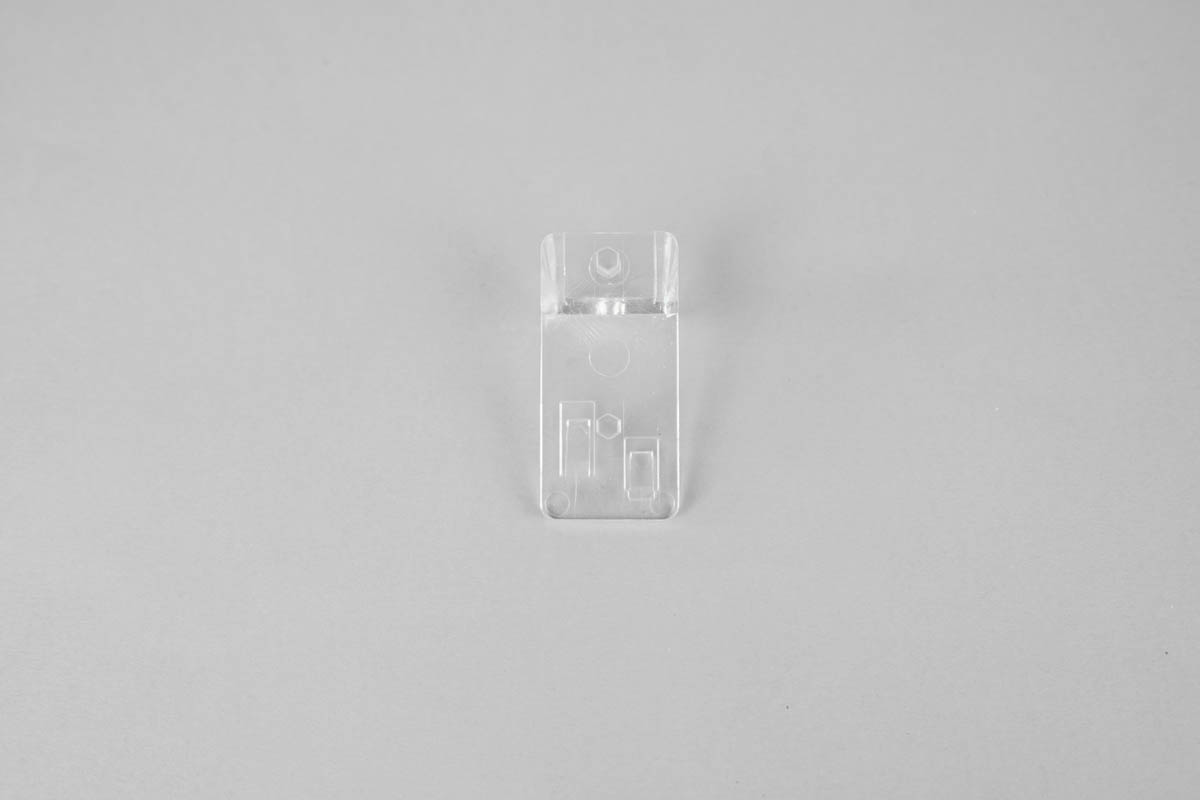
That is why, in commercial and institutional furniture (libraries, healthcare, education, offices), shelf supports have evolved from just a pin into engineered components. Bainbridge Manufacturing operates precisely in that world: small plastic hardware and cabinet components designed to make larger systems repeatable. A clear example is the 32201 Shelf Support, a locking shelf rest built for the 32 mm system, using dual 5 mm pegs and targeting demanding use cases.
1) The 32 mm system: why 5 mm holes matter for repeatability
32 mm is more than a conventionits an industrial language. It defines a grid and reference geometry that helps manufacturers standardize cabinet drilling patterns across shelves, hinges, slides, and accessories. Within that ecosystem, 5 mm shelf holes are a widely adopted standard for adjustable shelving in many production environments.
The upside is obvious: once drilling is controlled (position, plumb, edge distance), shelf height changes dont require new engineering. The downside is equally real: if the support hardware is weakor if the system does not prevent shelf liftadjustability becomes a reliability risk.
2) What locking means in shelf support hardware
A basic shelf support works by bearing load. A locking support adds a second function: preventing the shelf from lifting or shifting under user behavior (for example, pulling heavy items off a shelf, pushing upward while cleaning, or accidental impacts).
Bainbridge describes the 32201 as a Heavy Duty Institutional Locking Shelf Support made from polycarbonate. Material is not a footnote at this scale: with small-section hardware, the balance of stiffness, toughness, and impact resistance matters. Polycarbonate, when properly designed, can deliver strong impact behavior and stable dimensions for functional clips.
The design also uses two 5 mm pegs, spaced 32 mm vertically, and is intended for 3/4" or 1" shelving. That dual support point is not cosmeticit helps control rotation and distributes load, reducing lever effects that overstress single-pin designs.
3) Load, leverage, and the silent enemy: micro-movement
In shelving, failure is not always catastrophic collapse. Often, the real enemy is micro-movement: a shelf that creeps a few millimeters, starts marking edges, loosening support interfaces, and generating noise. That small play is the beginning of a degradation chainlower perceived quality, higher maintenance, shorter effective life.
Locking supports fight this in two ways:
- They restrict degrees of freedom, making lift-out and shift harder.
- They stabilize the shelf-to-sidewall interface, reducing vibration and wear.
In institutional furniture, where loads are heavy and usage is not gentle, this stability becomes a core requirement.
4) The optional screw slot: when the application needs redundancy
Bainbridge also notes an optional screw slot to secure the shelf. This feature is a practical recognition of an industrial principle: some applications are fine with clip retention, while others benefit from redundancy.
The hybrid logic is straightforward:
- The support locates the shelf within the 32 mm grid.
- A screw adds retention against extraction or tampering.
In public environments, that extra retention can reduce recurring maintenance. In technical storage, it can prevent dynamic loads from slowly working the system loose.
5) Performance standards: ANSI/BHMA A156.9 as a technical signal
It is not common for small shelf hardware to reference certification, yet Bainbridge states that the 32201 is certified to ANSI/BHMA A156.9 2015. This cabinet-hardware standard includes performance requirements and tests (including strength and cycling-related criteria). The industrial reading is clear: the component is positioned not only for appearance, but for measured behavior.
Without reproducing proprietary requirements, the presence of a test framework helps align expectations across design, manufacturing, and installation: shelf supports become specified components rather than generic commodities.
6) Applications and good practices: what makes the system feel solid
To capture the value of a 5 mm locking support, it helps to treat adjustable shelving as a system:
- Drilling quality: clean holes, controlled plumb, consistent edge distance.
- Shelf thickness within the intended range: out-of-range shelves create play or stress.
- Edge and surface quality: poor edge banding increases friction variability and creep.
- Load testing: the only meaningful test is under weight.
These practices turn adjustable shelving into a robust modulenot a good enough feature.
Editorial close
In furniture, the smallest parts often decide the biggest experience. A well-designed shelf support prevents micro-movement, carries load quietly, and makes a cabinet feel solid. Solutions like Bainbridges 5 mm locking supportbuilt around the 32 mm system with optional mechanical retentionreflect an industrial mindset: treat shelves as daily mechanics, not just boards. And when furniture is designed from that mechanical reality, quality stops being a promise and becomes repeatable behavior.