How deforestation and forest fragmentation affect the water cycle in watersheds
An international analysis led by the University of British Columbia warned that reducing forest cover decreases the capacity of watersheds
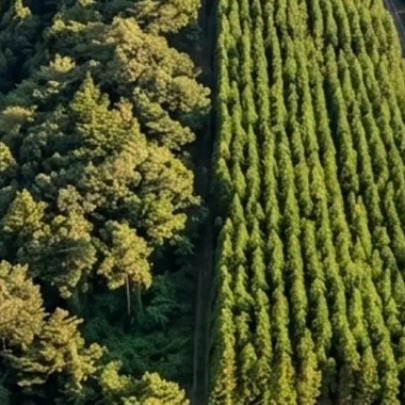
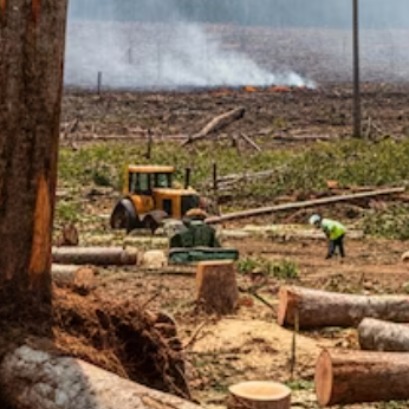
An international team of scientists, led by the University of British Columbia (UBC), conducted a global analysis showing that forest loss and fragmentation substantially alters the capacity of watersheds to retain and release water. The work was published in the Proceedings of the National Academy of Sciences (PNAS), and examined data from 657 watersheds distributed across six continents. The central finding noted that the reduction of tree cover and the reconfiguration of the forest landscape increases the proportion of water young, rain or snowmelt that escapes quickly, decreasing storage in soils and aquifers. The research, led by Ming Qiu of the UBC, provided quantitative evidence on how the advance of deforestation accelerates the dynamics of water in natural systems. According to Qiu, young water is a sign that the liquid moves quickly through the system, which implies a lower capacity of the basins to supply themselves in dry seasons. In addition, the presence of dense forests and Well connected, it allows water to be retained for longer periods, while fragmentation and loss of forest mass favor rapid leaks. The loss of water storage becomes especially critical in regions where logging constitutes an economic pillar, or in areas with high variability in rainfall. The analysis highlighted that, in these contexts, the availability of water for communities, ecosystems and industries is more vulnerable to extreme climate events. The importance of spatial configuration in degraded watersheds Unlike previous research, the University of British Columbia study included in its focus the spatial configuration of the remaining forest. The results showed that, in watersheds with a forest cover equal to or less than 40% or 50%, the way in which forest fragments are distributed and the presence of edges, transition zones between forest and clearing, acquire central relevance. According to the research, forest edges receive more solar radiation, show lower humidity and cause altered microclimates, which increases evapotranspiration and can contribute to limiting the amount of young water, helping to conserve humidity in the system. Forest fragmentation can then aggravate or mitigate the effects of deforestation depending on how the fragments are distributed. According to Adam Wei, professor at the Irving K. Barber Faculty of Science at UBC and co-author From the study, landscape planning may be part of the solution. Wei stressed that forest management strategies must go beyond the simple opposition between conservation and exploitation. Dense forests and spatial patternsIn landscapes where forest cover is high and forests remain dense and connected, the spatial pattern loses influence on the partitioning and storage of water. Under these conditions, microclimates are more stable and forest edges have a limited effect on water dynamics. Qiu stressed that the influence of spatial configuration is greater when forest cover is already low and disappears above certain thresholds. The analysis documented that, in basins with extensive tree cover, microclimatic changes associated with edges are less noticeable, which contributes to the water resilience of these ecosystems in the face of external alterations. work published by PNAS raised concrete challenges for environmental management in a context of climate change and pressure on resources. The authors warned that the design of policies for forest conservation and exploitation must consider both the amount of remaining forest and its structure and distribution in the landscape. The study emphasized the need to adapt management strategies to the particular characteristics of each region. In areas subject to intensive logging, fragmentation can reduce the efficiency of watersheds as natural storage systems, putting the water supply for the population and the environment at risk. In areas with high coverage, the focus should be on maintaining the connectivity and density of the forest to preserve the stability of the hydrological cycle. Watersheds function as natural water storage systems, Qiu said. The researcher recommended that territorial planning consider both the quantity and arrangement of forest fragments to guarantee long-term water security.