A forest is consuming one of the worlds largest deserts
The region of northern China has been affected by droughts and the advance of the desert, before this, an artificial forest glimpses as a solution
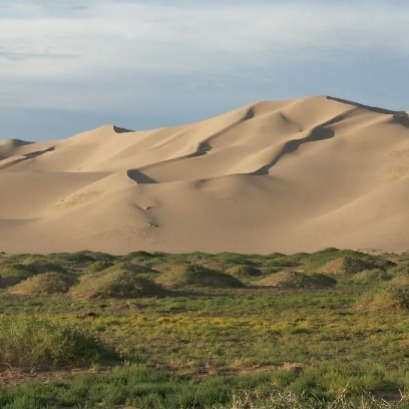
Deserts are the opposite of forests. These are vast extensions of earth characterized by its low precipitation and extreme climatic conditions. There are several in the world, which are known for their aridity and extreme temperatures. Today something unusual happens in China. With the objective of curbing the desertification that threatens northern China and affects more than 400 million people, the Asian country prepared to create a wall of 4,500 kilometers of trees. We tell you how an artificial forest is impacting the Gobi desert. A forest consumes one of the largest deserts in Gobis desert is located between northern China and southern Mongolia, in East Asia. It is one of the most extensive deserts in the world and houses various landscapes, from reddish sands and bare rocks to steppe areas. Gobis desert is also recognized by the large number of archaeological and paleontological findings. According to the specialized DW site to stop desertification, China began with a plan in the 70s. Peasants, scientists, government workers and volunteers joined together in a common cause: converting the desert into forest. It was a green belt of about 4,000 kilometers that allowed partially isolating the desert to recover just over 5 million hectares. Thus began the largest reforestation initiative in the world, which is expected to continue until 2050.The Great Green Wall in the Gobiel Government of China is very optimistic with the results of this long -term process. So far thousands of dunes have stabilized that were in motion in full desert. Likewise, the artificial forest stopped the sand storms throughout the country, was reduced by a fifth between 2009 and 2014. The number of trees planted in the desert is around 66,000, mainly of the Enterolobium cyclocarpum species and others of the Fabáceas family, given their adaptability to these lands. According to researchers, the reforestation project has created an important carbon sink that is capable of absorbing 5% of total industrial emissions.
IT MAY INTEREST YOU
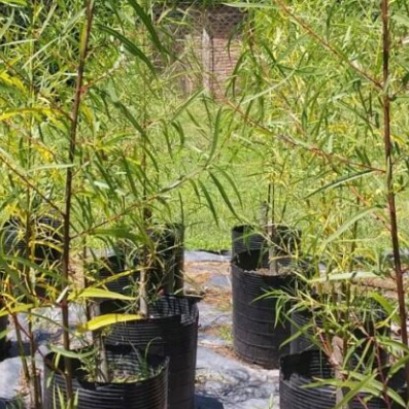 INTA Delta begins propagation of seven Creole willow clones for ecological restoration in Paraná
As a result of the rescue, domestication and registration work carried out by Teresa Cerrillo, a leading researcher in Salix Genetic Improvement, within the framework of the National Genetic and Forest Resources Programs of INTA, the multiplication and propagation of seven clones of Creole willow (Salix humboldtiana) began recently registered in the National Seed Institute (INASE) by INTA Delta del Paraná.
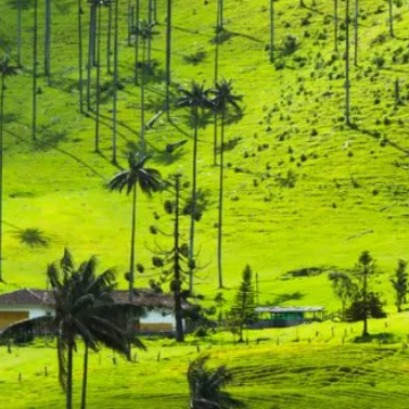 The tallest palm tree in the world is in South America: it is the height of a 20-story building
The worlds tallest palm tree stands deep in South America, a giant that challenges the limits of plant life Deep in South America, between the fog and the mountains, hides a giant tree that few know about. Majestic and silent, challenging the world on what plant life can achieve.
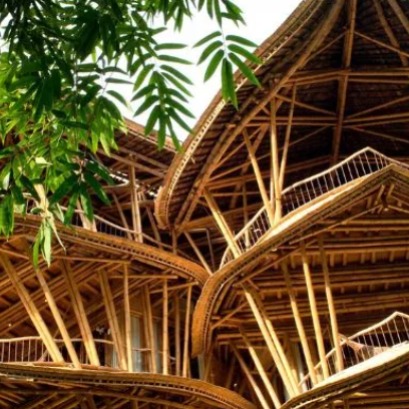 The South American country that changes construction thanks to an ancient, mega-resistant material: more than steel
This material that grows in South America creates the most resistant constructions and radically changes the world of architecture One particular building material has been used for millennia by various cultures in South America. This is due to its structural resistance that allows the creation of homes, bridges and shelters. Its archaeological presence shows that it was one of the most valued construction resources in seismic and humid areas.