Tree Day in Argentina: What is the origin and why was it chosen on August 29?
The impulse of Estanislao Zeballos to generate ecological awareness in our country. Today the day of the tree is celebrated in Argentina. The countries established different dates to raise awareness about the importance of trees for the life of the planet. What was the origin of this celebration in Argentina? ...
Estanislao Zeballos, an exponent of the 80th generation, established in the National Council of Education a special day dedicated to the tree. August 29, 1901 was the first time that tree day was held as a goal to highlight awareness about caring and protecting wooded surfaces. It is also intended to establish a policy to plant spaces in different spaces. Over time, it became a call to alert about climate change and indiscriminate felling. Another promoter of afforestation was Domingo Faustino Sarmiento who pointed out that ?the cultivation of trees suits a pastoral country like ours, because not only the Arboriculture joins livestock, but must be considered an indispensable complement. ?The destruction of the Native Argentina forests, for almost 13 years, is in force Law 26,331 of native forests. It is an indispensable tool to plan the use of these ecosystems allowing to balance the production and conservation of nature. The forest law changed the national scenario for the protection of native forests and made visible the problem and importance of the conservation of these ecosystems. In addition, it encouraged a progressive decrease in the annual deforestation rate in Argentina, stabilizing in recent years. However, since 2007, in Argentina 3,500,000 hectares of native forests were lost and with them all the associated benefits. 60% of the Argentine native forests are in the Chaco region, which occupies 11 of the 23 provinces of our country.
IT MAY INTEREST YOU
 Missions | New illegal felling in the Piñalito Provincial Park in San Pedro reveals the silent expansion of deforestation in protected areas
The advance of deforestation on protected areas was once again evident this week in the Piñalito Sur Provincial Park, in San Pedro, where the Ministry of Ecology and Renewable Natural Resources confirmed a new case of selective illegal logging. The event occurs in a context of growing concern about the fragility of the environmental control system in rural and border areas, where the scarcity of resources, personnel and logistics limits the capacity of surveillance against criminal organizations organized to steal native woods and market them on the black market in connivance with sawmill owners.
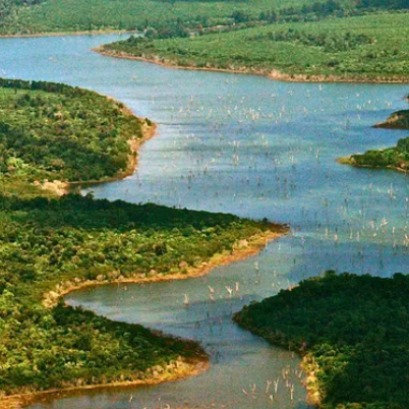 The second largest wetland in South America is located in Argentina: what is it?
Argentina has national parks that place it in a unique position within South America, competing with 300 others. Which is the largest? South America is home to more than 300 national parks, but many go unnoticed. There are extensive wetlands that have been the subject of major ecological restoration projects, to coastal mountains with deep indigenous heritage. Today we tell you the case of one located in Argentina.
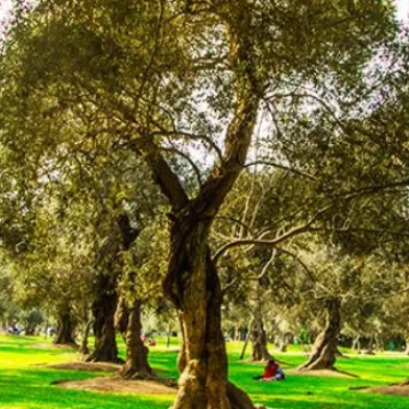 The city in South America that breathes thanks to a thousand olive trees planted in the 17th century
In the heart of South America there is a city that, among the noise and concrete, still breathes thanks to an olive forest