Amazon deforestation in Brazil fell to historic levels
Currently, the decrease is 50%. The goal is to definitively end logging by 2030.
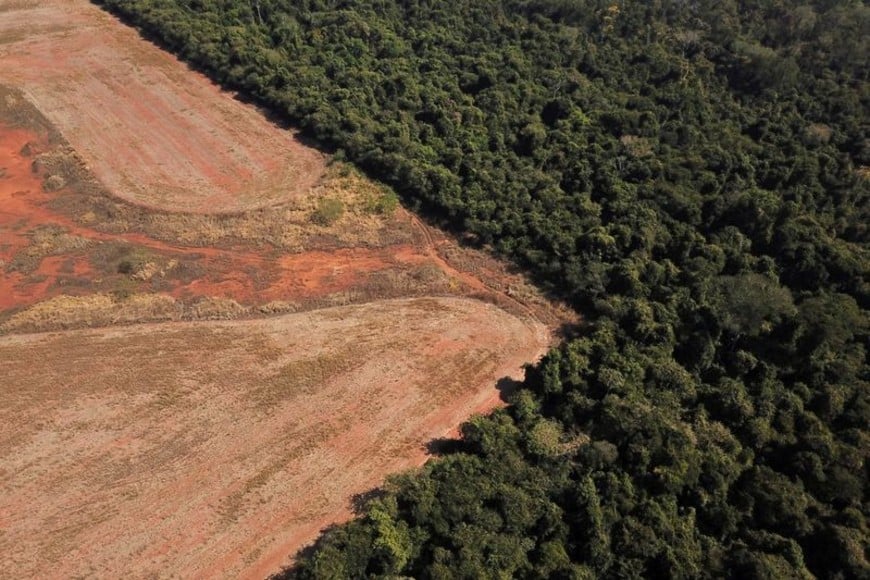
Deforestation in Brazil's Amazon rainforest saw a significant reduction in 2023, falling by half compared to the previous year and reaching its lowest level since 2018, according to government data revealed on Friday. This marks a major victory for President Lula Da Silva in his first year in office.
Lula focused his international reputation on fighting deforestation in the South American country, pledging to end illegal logging by 2030. Under his predecessor, Jair Bolsonaro, destruction in the world's largest rainforest accelerated considerably.
According to preliminary satellite data provided by the space research agency INPE, an area of 5,153 square kilometers in the Amazon was logged in 2023, representing a drop of 49.9 percent compared to 2022.
Although this figure is still considerable, equivalent to more than six times the size of New York City, it highlights the challenges Lula faces in fulfilling his commitment. However, it is the lowest level since 2018, the year before the start of Bolsonaro's mandate.
In December alone, deforestation saw a 23 percent year-on-year decline, reaching 176.8 square kilometers, according to INPE data.
The Environment Ministry attributed these positive results to "decisive" inspection efforts by environmental watchdog Ibama, highlighting a 106 percent increase in the number of infringement notices issued by the agency during the period.
In a statement posted on social media, the ministry said: "This is the first step to achieving the goal of zero deforestation by 2030."

IT MAY INTEREST YOU
 Canadian researchers make biochar from wood waste that rivals steel in strength
Researchers at the University of Toronto have developed monolithic biochar from wood that can reach an axial hardness of up to 2.25 GPa, similar to mild steel.
 The second largest wetland in South America is located in Argentina: what is it?
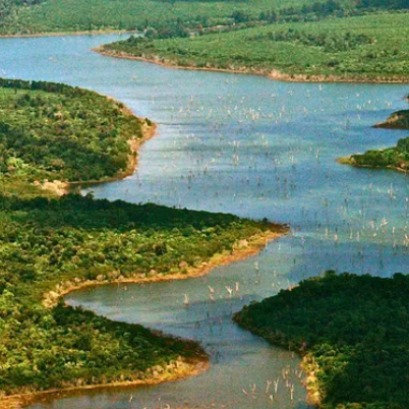
Argentina has national parks that place it in a unique position within South America, competing with 300 others. Which is the largest? South America is home to more than 300 national parks, but many go unnoticed. There are extensive wetlands that have been the subject of major ecological restoration projects, to coastal mountains with deep indigenous heritage. Today we tell you the case of one located in Argentina.
 The forest of the oldest shadows: the story of the petrified trees
One of the natural treasures of Río Negro turns 23 years old under the protection law that allows its conservation. Where it is and how it was formed. Río Negro celebrates 23 years of conservation in the petrified forest as a Protected Natural Area (ANP). It is a space of 625 hectares that protects an exceptional site of fossil trunks that date back more than 60 million years.