Neuquen | They monitor with an innovative sanitary map the control work of sirex noctilio that affects pine plantations
Neuquén seeks to become a vanguard in the fight against a wasp that does not give up
The wasp massively affects pine forests. The province is the first to draw up a sanitary map that monitors and allows comparison of the progress of sirex noctilio, a species known as "pine sweeper".
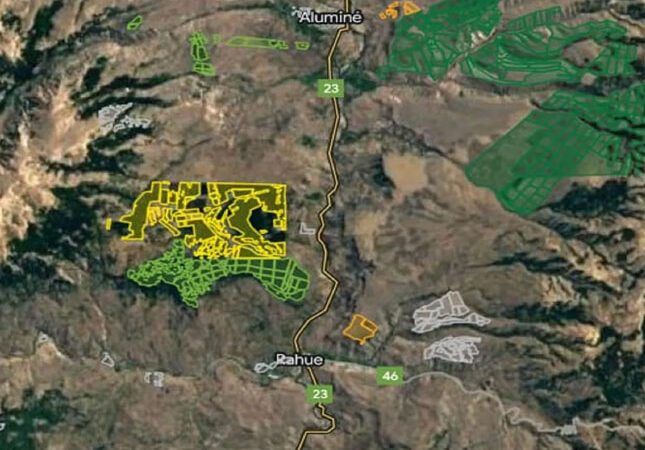
The government of the province, together with INTA and SENASA, implement a new method that allows graphic comparison of the data obtained in aerial surveys (by helicopter) in 2019 and 2023. This task was coordinated with the advice of INTA EEA Bariloche.
In the first overflight it was possible to identify that more than 80% of the plantations were in satisfactory sanitary conditions, that is, with levels of pest damage of less than 10%.
While with this year's operation, it was concluded that the sanitary conditions have been maintained despite the drought conditions that negatively affect the trees, generating favorable conditions for the Sirex attack.
The Undersecretary of Production, Amalia Sapag, celebrated the complex method and remarked that Neuquén is the only province in the country that uses it. "The INTA technician with our team was working on it and then what is done is the aerial survey, completing forms and filming, with a specific visual field, marking it, and then it is complemented with a field check," explained the official. .
In addition, the sanitary map may be consulted by producers and interested parties on this website.
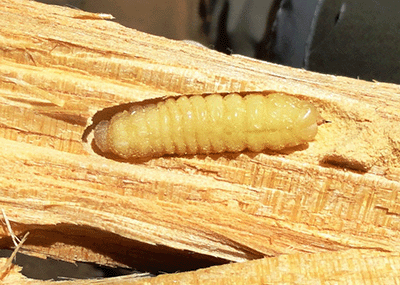
The pine borer wasp is an insect that fulfills its cycle inside the wood; only in the adult state does it spend its life outside the tree.
Adults emerge from trees, leaving a sizable hole in the bark, live for a few days, and do not feed. It has a short flight period, covering summer and part of autumn depending on the area and weather conditions (especially temperature).
Males emerge about a week before females. They mate at the height of the treetops where a greater number of males are concentrated. After the initial period of flight, the females search for weakened trees to embed the eggs (approximately two per gallery) under the bark, making single or multiple perforations with the help of their ovipositor.
Although in Neuquén it is still necessary to carry out the field corroboration of the data obtained, the sanitary map shows the provisional data of the survey that shows that in the province 27% of the plantations do not register symptoms of the disease, which refers to about 15,359 hectares with 0% apparent affectation.
The affectation is incipient (5%) in 10,848 hectares (19%) and slight in 16,524 hectares (29%). The rest is divided into moderate, severe and extreme, not reaching larger volumes, with the area surveyed at the provincial level of 56,175 hectares.

IT MAY INTEREST YOU
 Combilift Unveils the 2025 Christmas video “Twelve Days of Christmas” – with a Twist!
Monaghan, Ireland – November 2025
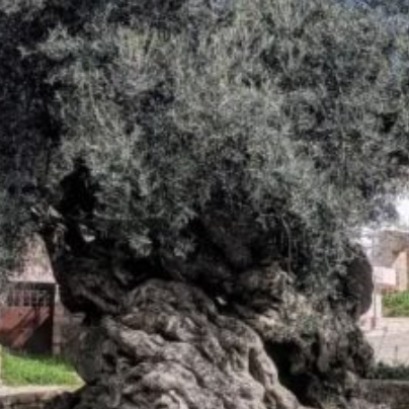 Experts cant believe it, but this tree is the oldest in the world and continues to bear fruit: it is 4,000 years old.
Nature keeps secrets that defy the passage of time, and one of the most surprising examples is a tree that, approximately 4,000 years old, continues to bear fruit today. This specimen has become a symbol of resistance and longevity, capable of surviving climate changes, landscape transformations and human activity itself.
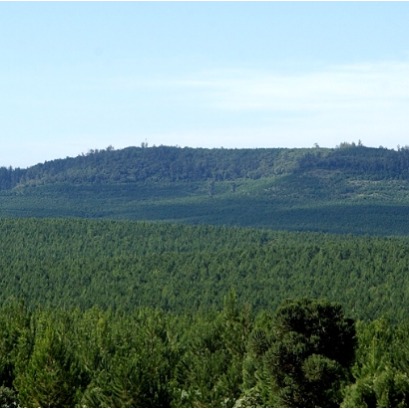 Free seminar on the implementation of the European EUDR regulation on deforestation-free wood products
The Argentine Forestry Association (AFoA) organizes the seminar «EUDR in Forest Products: Current status of implementation. Regulatory requirements and private experiences", which will take place on Wednesday, November 26, from 11:00 a.m. to 12:00 p.m., via Zoom, with live streaming on YouTube. The European Regulation on Deforestation-Free Products (EUDR) will enter into force on December 31, 2025 and will impose new requirements for forest products entering the European Union market.