The day the fire broke out in the southern jungle
An environmental microhistory of the 19th century
Alejandro Dezzotti, from the Department of Ecology based in San Martín de los Andes, of the National University of Comahue, analyzes in his article the historical background of fires in Patagonian forests and their consequences up to the present. And he reminds us that "the history of fire is the history of the forest and that of our own species."
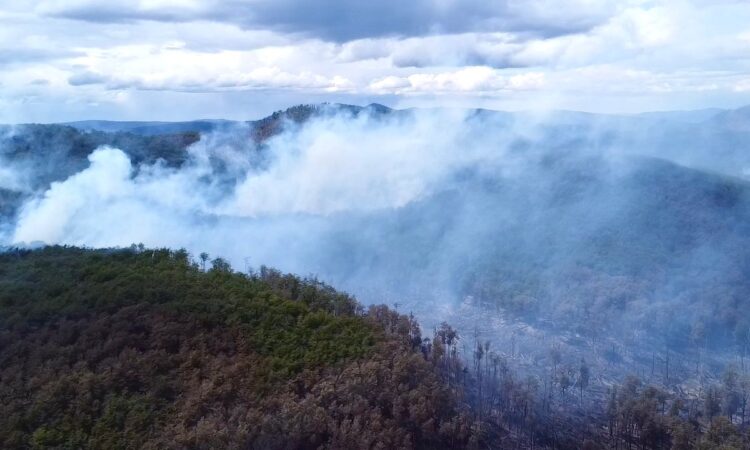
TIERRA DEL FUEGO (June 2023).- During the summer of 1851, an intentional fire in the southern region of South America destroyed more than 230,000 hectares of one of the most extraordinary jungles that exist on our planet. This event represented the first major socio-environmental catastrophe documented by its protagonists in this region.
The present time is decidedly different from that time, but the tragedy of the anthropogenic fire that devastates the forest still continues.
the land of fire
We need to remember that fire is not simply a tool, a presence, or a process for us to manipulate, but a relationship. Stephen Pyne. The Pyrocene (2021).
Earth is the only planet in the solar system that has all three elements of the "fire triangle" that make fire possible: the ignition source, atmospheric oxygen, and fuel. No other planet has them all. The fire begins by the effect of various ignition sources such as a meteorite or lava from a volcano, but these elements are relatively rare on our planet.
Only the powerful natural discharge of static electricity from lightning explains the occurrence of combustion on a global scale. Lightning is a geophysical phenomenon that has been present since the origin of the planet, although only a small proportion of them reach a combustible ground; most hit rock or sea. And of those that hit something that can be ignited, only some can convert the electrical charge into combustion. And furthermore, the storm that produces lightning also produces rain; what the first can ignite, the second can stifle. In other words, the only rays that can produce fire are the so-called "dry" ones.
The other two elements, oxygen and fuel, are unique products of life, a process that only occurs on Earth. Fire is a creation of the living world, a reaction dependent on life supplying it with both oxygen and fuel. And for this reason, on the other planets, fire is non-existent.
Photosynthesis played a key role in the existence of this set of incandescent particles and molecules that emit heat and light: that of marine organisms, first, filled the atmosphere with oxygen, and that of terrestrial plants, later, covered the surface of the biomass fuel.
The first evidence of fossil charcoal corresponds to the time when the first terrestrial plants and forests appeared, and since then, fire has been an environmental presence, an ecological process and a planetary evolutionary force. In short, fire is not something imposed on the biota, like wind or flood, but arose from the very character of it.

IT MAY INTEREST YOU
 Missions | New illegal felling in the Piñalito Provincial Park in San Pedro reveals the silent expansion of deforestation in protected areas
The advance of deforestation on protected areas was once again evident this week in the Piñalito Sur Provincial Park, in San Pedro, where the Ministry of Ecology and Renewable Natural Resources confirmed a new case of selective illegal logging. The event occurs in a context of growing concern about the fragility of the environmental control system in rural and border areas, where the scarcity of resources, personnel and logistics limits the capacity of surveillance against criminal organizations organized to steal native woods and market them on the black market in connivance with sawmill owners.
 The second largest wetland in South America is located in Argentina: what is it?
Argentina has national parks that place it in a unique position within South America, competing with 300 others. Which is the largest? South America is home to more than 300 national parks, but many go unnoticed. There are extensive wetlands that have been the subject of major ecological restoration projects, to coastal mountains with deep indigenous heritage. Today we tell you the case of one located in Argentina.
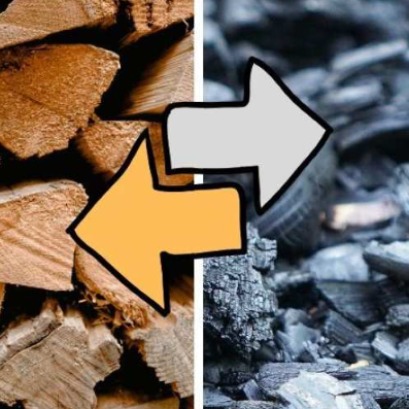 Canadian researchers make biochar from wood waste that rivals steel in strength
Researchers at the University of Toronto have developed monolithic biochar from wood that can reach an axial hardness of up to 2.25 GPa, similar to mild steel.