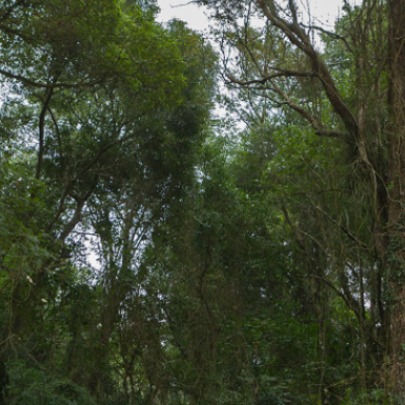
We celebrate National Tree Day in Argentina highlighting its role and care
Senasa works to benefit this natural resource and source of life through the National Forest Health Program.
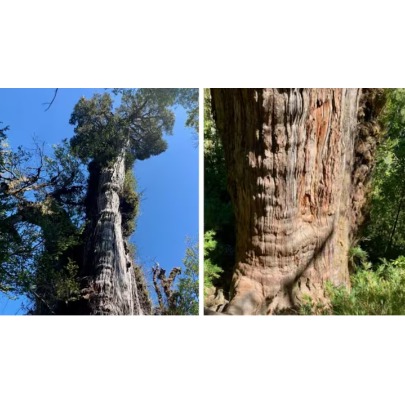
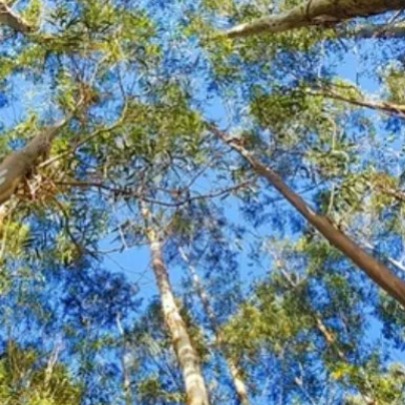
Buenos Aires - Since 1901, every August 29, our country celebrates National Tree Day, a commemoration proposed by Dr. Estanislao Zeballos, highlighting the importance of this natural resource. Trees oxygenate the air, protect the soil and reduce the effects of global warming, among other of their numerous and vital functions. In this context, the National Agri-Food Health and Quality Service (Senasa), through its National Directorate of Plant Protection, carries out the National Forest Health Program, whose main objective is to work to protect native and planted forests from pests that may affect them, in addition to reducing the economic damage they produce. The Role of SenasaIt is like this that Senasa works through two well-defined axes: field work, based on the monitoring and detection of the presence and distribution of pests present in our country and the control of wooden packaging. Regarding the first axis, depending on the results obtained in the field work, different pest management measures are carried out. These measures can be cultural or chemical management or biological control, which is much more environmentally friendly since control is carried out through natural enemies. An example of this is the “pine borer wasp” (Sirex Noctilio) that attacks only trees of the Pinacea family, having a special preference for those belonging to the Pinus genus. Regarding wooden packaging and Support and/or Accommodation Wood in international trade, they are considered a means of transport for the dispersion of pests. Therefore, to prevent the entry of pests that are not present in our country, inspections are carried out at all points of entry to packaging that comes on wooden pallets. Likewise, when merchandise is exported to prevent the entry of pests to third countries, Senasa enables establishments to carry out the corresponding phytosanitary treatment on wooden packaging. Packaging with these characteristics is provided by establishments framed in three figures created for this purpose: Treatment Application Centers Wooden Packaging, Support Wood and/or Accommodation (CATEM); Traditional Wood Drying Kilns (HOSETRAM) and Wood Packaging Factories (FEM). These establishments are authorized and supervised by Senasa and, in addition, must have at least one Technical Responsible professional trained by Senasa to certify the correct application of the treatment in question. The wooden packaging, support wood and/or accommodation wood, after undergoing a mentioned treatment, are identified by a mark established in the International Standard, which is recognized by the National Plant Protection Organizations (NPPO) of the importing countries and which indicates that they are suitable for marketing. In our country, this brand is for exclusive use by the Centers authorized by Senasa.Regional ContextAt the regional level, the National Forest Health Program is a member of the Southern Cone Forest Health Technical Group (COSAVE). Chile, Uruguay, Brazil, Paraguay, Bolivia and Peru participate in it. In this group they work on the protection of forest pests at the regional level, as an example we can mention the limantry pest, currently absent in the region and at the COSAVE level they are working to prevent it from entering. Returning to todays anniversary, we can say that on National Tree Day we seek to remember the importance of its care and highlight the role it plays in our lives: among other functions, they give us the oxygen we breathe, participate in the regulation of the climate, reduce wind and also noise pollution, in addition to protect ourselves from rain or intense sun. The National Forest Health Program contributes with prevention and control activities, as well as the preservation of forest resources in the national territory.