Natural or artificial forests: which ones withstand heat waves better?
Planting trees always seems like a good idea. But when faced with an extreme heat wave, not all forests respond the same. The difference between a natural one and a plantation decides who survives.
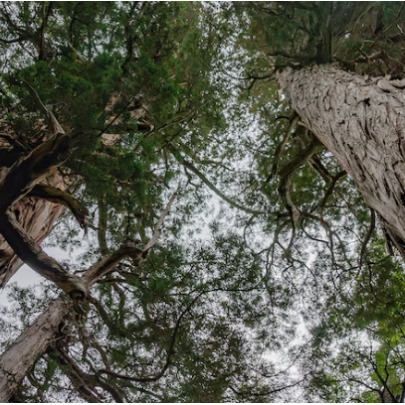
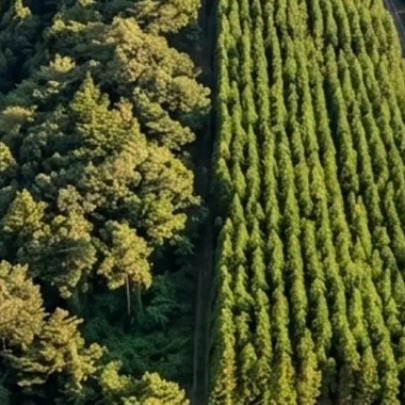
The summer of 2022 was brutal in China. For weeks, the Yangtze River basin endured the most intense simultaneous drought and heat recorded in decades: a combination that in ecology is called a compound drought-heat wave, and which acts as a planetary stress test for any forest ecosystem. The scientists observed what was happening. And what they saw was not exactly what everyone expected. A team led by Yong Su, from the Chinese Academy of Sciences, has published in Water Resources Research the most detailed analysis to date of how the forests of that basin reacted during the extreme episode. To measure it, they used two high-resolution satellite indicators: the kNDVI, which estimates active vegetation cover, and the GPP (gross primary productivity), which quantifies how much carbon a forest is fixing at a given time. They are, in practice, two ways of measuring the photosynthetic pulse of the forest from space. The main conclusion is clear and has direct implications for reforestation policy: natural forests withstand thermal shock much better, but artificial plantations recover faster. And this apparent paradox contains more information than it seems at first glance. What protects the forest when the heat hits A mature natural forest is not a sum of trees. It is an architecture. The canopies are staggered in height, creating layers of shade that reduce the soil temperature by several degrees compared to the outside. Beneath the thicker trunks, a network of ancient roots and mycorrhizal fungi distributes water and nutrients in solidarity between individuals. The diversity of species also means diversity of survival strategies: some root deep and reach aquifers; others reduce their transpiration even before the stress becomes critical. What differentiates a natural forest from a plantation is not only the number of trees, but the complexity of the interactions between them," says the study by Su and his team. "This complexity acts as a buffer against external disturbances. In the Yangtze basin, natural forests showed significantly less photosynthetic decline than plantations during the 2022 heat wave: kNDVI remained more stable, and GPP did not fall as abruptly. In other words, they continued to operate when the plantations began to go out. The reasons are structural. Canopy stratification acts as a real heat shield: each layer absorbs some of the radiation before it reaches the ground. The soil of an ancient forest, in addition, is saturated with organic matter accumulated over decades that retains moisture much more effectively than the compacted and homogeneous soil of a plantation. And the mycorrhizal network, which connects the trees to each other at the root level, allows water to be redistributed in real time within the ecosystem. The paradox of the plantation that recovers soonerHere comes the nuance that undoes the simple reading. Because the plantations, although they suffer more during the heat wave, photosynthetically recover more quickly once temperatures return to normal. Sus team measured it: the GPP of plantations rebounded earlier and faster than that of natural forests. Why? Because a young plantation, with fast growth and a simple canopy, has a specific structural advantage in recovery: its trees, genetically selected to grow quickly, restart their metabolism more quickly. The system does not have the complexity of the natural forest, but it does not need to manage that complexity to start again. Be careful, this does not mean that plantations are better for the climate. The speed of photosynthetic recovery is only one of the variables. Natural forests store much more carbon per unit area, harbor incomparably greater biodiversity and provide ecosystem services, from water regulation to soil quality, that a homogeneous pine plantation cannot replicate. The comparison between resistance and resilience is not a marker of ecological excellence: they are metrics that serve different things. Resistance during the blow. Recovery after. The problem is that in climate change ecology we need both things at the same time, and no type of current forest optimizes them simultaneously. What does this tell us about reforestationThe study has a direct consequence for environmental policy. In recent years, large-scale reforestation programs have relied heavily on plantations: they are cheap, fast and produce measurable biomass in decades instead of centuries. The argument is pragmatic: if we want forests now, we must plant them now. What Su and collaborators research adds to that debate is that speed has a cost of structural resilience that only becomes visible when extreme stress hits. A heat wave like the one in 2022 in the Yangtze, which in other times would have been a very rare anomaly, is today projected to be an increasingly frequent event in East Asia, southern Europe and much of the American continent. If extreme events become the norm, the choice between planting a plantation or restoring a diverse forest stops being just a matter of cost or time: it becomes a decision about what kind of ecosystem we want to be there when the heat really hits. The study is based on remote sensing, which means that the exact physiological mechanisms - sap flow, water status of the roots, mycorrhizal activity in real time - have not been able to be measured directly. Satellites see the result, not the process. That is the central limitation: we know precisely what happened at the basin scale, but in-situ data that would confirm cell-to-cell mechanisms are still scarce. What forest do we want when the next one arrives? The question that the study leaves open is not ecological: it is one of design. If compound heat waves are going to become more frequent, and everything indicates that they are, the goal should not be just to plant more trees, but to plant the right ones in the right place. Restore structural diversity where it has been lost. Mix species from different root depths. Protect remaining natural forests as frontline climate infrastructure, not as a sentimental option. Science is beginning to have sufficient spatial and temporal resolution to distinguish which type of forest resists best and when. What is missing is for this resolution to also reach those who make decisions about what and where to plant. Because planting is necessary. But planting poorly, in a climate that is no longer that of thirty years ago, could be sowing the next crisis even before the current one arrives.