Deep concern in the global botanical community: a study affirms that the forests of Honduras may disappear in less than 20 years
A scientific report has set off alarms in the field of botany globally. Honduras forests, vital for biodiversity and climate balance, could face complete disappearance in less than 20 years. The botanical community is reacting with concern to the projections. These forests, rich in species and essential for carbon capture, are in a critical situation. The research highlights the urgency of implementing effective conservation strategies to reverse this trend.
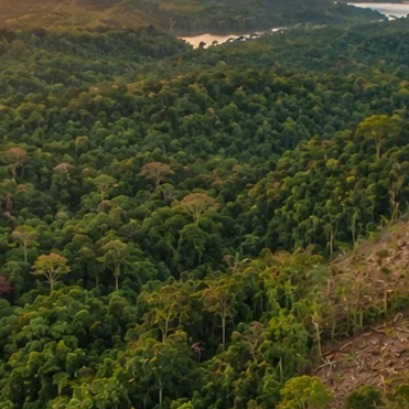
This is how the Institute of Justice projects the disappearance of Honduras forests. The State of the Country 2026 report: Climate change, forests and life at risk, published by the Institute of Justice and the ASJ, projects two scenarios. If Honduras maintains the rate of forest loss recorded between 2022 and 2024, of 2.25%, the country will run out of forests in 2045. If the trend were the average since 2013, of 0.66%, the disappearance would occur in 2094. The magnitude of this possible loss is difficult to underestimate. Honduran forests not only host a vast amount of flora and fauna, many of them endemic, but they also play a crucial role in regulating the regional and global climate, acting as carbon sinks and contributing to water stability. The damage referred to in the report is not a new phenomenon, but its acceleration and temporal projection are the most worrying aspects. Various factors, both of natural and anthropogenic origin, have been undermining the resilience of these ecosystems. Among the main causes are deforestation, unsustainable agricultural expansion, illegal logging and the increasingly pronounced effects of climate change, which are manifested in more intense and prolonged droughts, as well as an increase in the frequency of forest fires. What does it mean for Honduras to lose its forests in 2045? The loss of Honduras forests would have far-reaching ecological, economic and social repercussions. For botany, it would mean the potential extinction of countless plant species, some of which could have medicinal properties or be key to future biotechnological developments. The countrys biodiversity, already threatened, would suffer an almost irreparable blow. Forest degradation also directly affects local communities that depend on forest resources for their subsistence, whether through the collection of non-timber products, hunting or subsistence agriculture. The disappearance of forests could intensify rural poverty and force internal migrations. From a climate perspective, the disappearance of these forest masses would release large amounts of carbon dioxide into the atmosphere, contributing to global warming. In addition, the water cycle would be altered, with possible consequences on the availability of fresh water for human consumption and for agriculture in the region. The study in question seeks to be a call to action. Researchers insist that the window of opportunity to reverse this situation is rapidly closing. Strong public policies and reinforced international cooperation are needed. The situation in Honduras is not an isolated case, but the 21-year time projection for the disappearance of its forests is particularly alarming and serves as a grim indicator of the ecological crisis that the region and, in extension, the planet is going through. It is essential that governments, non-governmental organizations and civil society work in a coordinated manner to implement sustainable forest management practices, promote reforestation and protect the areas of primary forest that still remain.