Over the years, that logic changed. Today, the Patagonian larch is strictly protected and cutting one is a serious crime. The priority became conservation and study, not extraction.
Millennial larch trees grow there, some of the oldest trees in the country, true living witnesses of a nature that has resisted for centuries in the heart of Chubut.
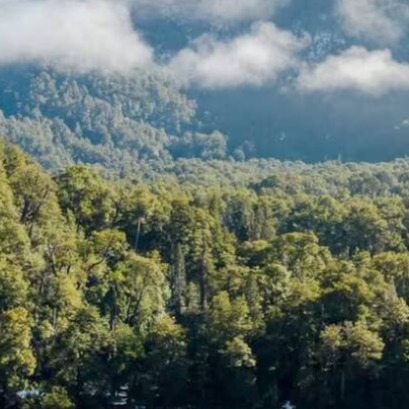
In a remote corner of Argentine Patagonia there is a forest where the passage of time seems to have lost authority. There, surrounded by humid mountains, moss-covered soils and a climate that demands respect, trees grow that were already standing when the world was very different. This is neither a legend nor an exaggeration: the Patagonian larch forest of Chubut is home to some of the oldest living beings in the country and is one of Argentinas least known natural jewels. These ancient trees not only survived centuries of storms, fires and geological changes. They also went through the arrival of modern humans, forest exploitation and industrialization without losing their essence. Their presence is an uncomfortable and fascinating reminder: nature has times that do not coincide with ours. The larch: a giant that grows in silence The undisputed protagonist of this ecosystem is the Patagonian larch, a species native to the southern Andes that can exceed 50 meters in height and, above all, a thousand years of life. Its growth is extremely slow: in some cases, just a few millimeters per year. That slowness, far from being a weakness, is the key to its strength. Each ring of its trunk functions as a page in a natural archive. There it is recorded what the weather was like, how much rain there was, if there were droughts or fires. For this reason, larch trees are studied as scientific witnesses of Patagonias environmental past. A forest that seems from another era Entering a larch forest is a different experience from exploring any other forest. The sound fades, the temperature drops and the light filters with difficulty between enormous trunks. The soil, soft and dark, is covered with leaves and roots that have been accumulating for centuries. There is no rush. Everything in that environment invites you to slow down, to observe carefully. It is a landscape that was not built to impress, but to remain. And perhaps that is why it has such an impact. In Chubut, these forests survive in protected areas, far from large urban centers. They are fragments of an ancestral Patagonia that was once much more extensive and that today resists as best it can in the face of known threats. From exploitation to conservation During much of the 20th century, the larch was intensely exploited for the value of its wood, famous for its extreme durability. That history left deep scars: many forests disappeared before the irreversible damage that was being caused was understood. Over the years, that logic changed. Today, the Patagonian larch is strictly protected and cutting one is a serious crime. The priority became conservation and study, not extraction. Walking through these forests is understanding why. A larch that falls cannot be replaced in a human lifetime: its recovery takes centuries. A message for the present In times marked by climate change and the accelerated loss of biodiversity, the ancient larch forest functions as a silent warning. He doesnt shout, he doesnt impose himself, but he says a lot. It teaches that resistance is not always visible and that taking care of what takes a thousand years to grow should be an absolute priority. These trees are not just part of the Patagonian landscape. They are part of the living history of Argentina, although they do not appear in school manuals or official acts. They are still there, growing patiently, while the world accelerates around them.