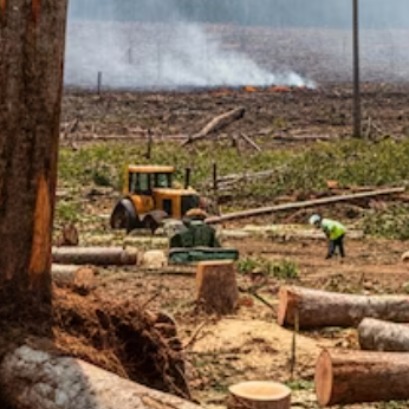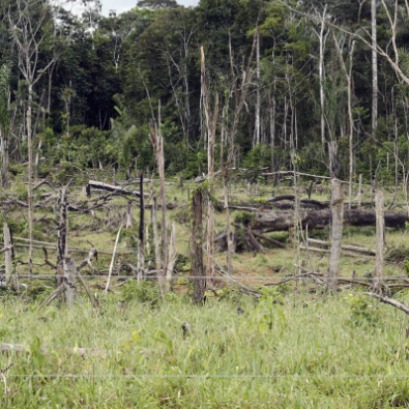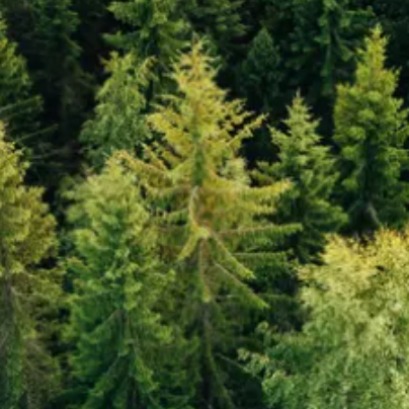
Europe cuts down less wood than its forests generate, with the sole exception of one country
In most cases, forest management is being developed sustainably, allowing forests to grow despite logging activity.
The use of wood continues to be more than necessary in todays world because it is a natural, renewable and versatile material that is mainly used in construction, furniture, paper production or as fuel. But in order to carry out this production, forests play an essential role. However, if a healthy and balanced forest ecosystem is to be maintained in the long term, the amount of wood extracted each year must be less than the natural capacity of the forest to regenerate. This analysis is based on a simple but fundamental principle: that logging does not exceed the so-called net annual increase, which measures how much trees grow in that same period. The difference between these two variables – the natural growth of the forest and the amount of wood harvested – is used as a key indicator of sustainability. When growth exceeds extraction, the forest is not only maintained, but also increases its volume of available wood. On the other hand, if the opposite occurs, there is a progressive loss of forest resources that can compromise the ecological balance and biodiversity. The most recent data reflect a mostly positive situation in Europe. In 2023, a total of 23 European Union countries, for which information is available, recorded a net annual increase greater than the amount of wood extracted. This indicates that, in most cases, forest management is being carried out in a sustainable manner, allowing forests to continue growing despite logging activity. Among the countries with the best results, Romania stands out, where forest growth after logging exceeded the wood extracted by 39.9 million cubic meters. They are followed by Sweden, with a positive balance of 26.4 million cubic meters, and Poland, with 26.3 million. These figures show not only a controlled exploitation of resources, but also an important capacity for regeneration of their forest masses. However, not all countries present the same balance. Estonia was the only case where timber extraction exceeded natural forest growth. Specifically, 11.6 million cubic meters were extracted compared to an increase of 9.1 million, which caused a net reduction of 2.5 million cubic meters in its forest resources. This data highlights the importance of adjusting management policies to avoid long-term deterioration. Sustainable logging is, therefore, an essential pillar of modern forest management. This approach focuses on wood that is harvested in a planned manner, excluding losses caused by fire, pests or other natural disasters. In this way, a more accurate picture of the real impact of human activity on forests is obtained. Ensuring this balance is not only key for the logging industry, but also for the conservation of biodiversity and the protection of ecosystems. Forests are not only a source of resources, but also fundamental allies for the future of the planet. Spain, third largest country Spain has established itself as one of the great drivers of the greening that Europe has experienced in recent decades. Not in vain, it occupies third place among the European Union countries with the largest forest area, with more than 18.5 million hectares. It is only surpassed by Sweden, which leads the ranking with nearly 28 million hectares, and Finland, with just over 22 million. After Spain are France, Germany and Poland, and between the six they concentrate approximately two thirds of the entire forest area in the Union. Within Spanish territory, forests already cover 37% of the surface, a proportion that has not stopped growing in the last fifteen years. This sustained progress reflects both the natural evolution of the landscape and changes in land use. According to the Ministry for the Ecological Transition (Miteco), the largest area of ??wooded forest is located in Cáceres, followed by Badajoz, Cuenca and Huelva. At the opposite extreme, provinces such as Almería, Alicante and Las Palmas present the smallest figures. If we look at the total volume of forest biomass, Spain reaches 683 million cubic meters. In this indicator, Navarra, La Coruña, Asturias, Lugo and Lérida stand out as the territories with the highest density of accumulated wood, while again Almería, Alicante and Las Palmas are among the areas with the lowest volume. Much of this forest growth is explained by profound social transformations, especially the rural exodus that has marked recent decades. The progressive abandonment of agricultural land, together with the decrease in livestock activity and areas dedicated to pasture, has allowed natural vegetation to recover ground. As a consequence, large areas of the country have experienced spontaneous regeneration, favoring the expansion of new forest masses. Despite this positive evolution, Spanish forests continue to face important challenges. Forest fires continue to be the main threat, although in recent years their incidence has decreased. Both the improvement of extinguishing devices and the development of more effective prevention strategies have contributed to this. Furthermore, the increase in social awareness and the commitment of public administrations have reinforced the protection of these ecosystems.