With experiences from five countries and focus on small producers, Misiones opened the International Bamboo Week
With the participation of international experts, researchers, producers and representatives of cooperation organizations, this Tuesday the International Bamboo Week in Misiones began in Oberá, within the framework of the International Seminar on Bamboo as a Driver of Green Development and Climate Resilience.
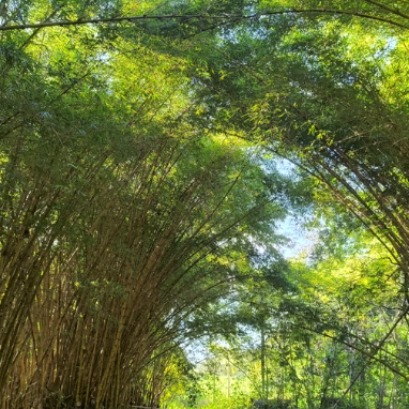
The opening of the activities brought together specialists from different Latin American countries who shared experiences on the production, industrialization and use of bamboo, a natural resource that is gaining prominence in sustainable development strategies at a global level. The program is promoted by the National University of Misiones (UNaM), INTA and the International Bamboo and Rattan Organization (INBAR), together with other institutions, and includes an agenda of conferences, technical meetings and practical work that will last until Friday. The objective is to exchange experiences, knowledge and good South-South cooperation practices, and contribute to the creation of a favorable environment for the growth and consolidation of the bamboo sector in Latin America," explained the coordinator of the meeting and researcher at the Faculty of Engineering of Oberá, Javier Duarte. A resource with growing global economic weight. During the opening, the growing role of bamboo in the international sustainable development agenda was highlighted. Considered one of the natural resources with the greatest potential to reduce poverty, generate rural employment and promote sustainable management of the environment, bamboo is consolidated as a productive alternative strategic.At a global level, among the main producing countries, the production and consumption of bamboo is estimated at approximately 70 billion dollars annually, reflecting the growing economic relevance of this resource.In recent years, technological innovation, productive use and trade of bamboo have experienced accelerated growth.Its versatility as a wood substitute, reconstituted composite material and raw material for panels, pulp and paper, food, beverages and other products, positions it as a key resource to confront global challenges such as climate change, environmental degradation and the transition towards more sustainable economies. Bamboo is an integral part of the forest ecosystems and cultural expressions of Asia, Africa and Latin America. In particular, several Asian countries - with China as the main reference - have managed to take advantage of this resource to promote the green economy, strengthen environmental management and contribute to the mitigation and adaptation to climate change through consolidated value chains. Latin America, a region with high potential In Latin America, an approximate area of 15 million hectares of native areas and bamboo plantations is estimated, making the region in one of the richest in diversity and distribution of this species. Bamboos are present in a wide variety of ecosystems, from tropical humid forests on the Pacific and Atlantic coasts to high Andean ecosystems, reaching altitudes of up to 4,300 meters above sea level in the paramos. Historically, bamboo has been used in numerous countries for the construction of boats, social housing, hotels, churches, schools, bridges and tourist complexes, in addition to agricultural tools, musical instruments and multiple traditional and modern uses.Experiences from five countries in the region and international cooperationThe first day of the seminar was marked by presentations by specialists from different countries who shared experiences of production, technological innovation and development of value chains.The technical opening included the exhibition A look at bamboo globally and in the region of Latin America and the Caribbean, by Pablo Jácome Estrella, regional director of INBAR for Latin America and the Caribbean.Then the conference on bamboo and climate resilience was presented virtually, based on the experience of the Philippines, by Luis Felipe López, from Base Bahay. The panorama of the productive chain in Argentina was addressed by researcher Javier Duarte, from the Faculty of Engineering of Oberá (UNaM), who analyzed the current situation of bamboo in the country and the opportunities for its development. Business and productive experiences from the region were also shared, such as the exhibition “Production and commercialization of bamboo in Uruguay with a view to green development”, presented by Gabriel Arenares, from Bambú del Este, and the use of Guadua in Paraguay, led by Nicolás Silva. In the afternoon, the program continues with new international presentations. Marilyn Rojas, from the National University of Costa Rica, talks about the Bamboo Field Schools in Costa Rica, an experience aimed at linking production with the transformation of the resource. From Brazil, specialist Daniel Lopes, from Fueling Sustainability, will share his experience on the use of bamboo for biomass in the industry. In addition, the Government of Misiones presented the Plan for the Promotion and Sustainable Development of Production, Bamboo Exploitation and Industry, promoted by the Ministry of Ecology and Renewable Natural Resources of the province. South Bamboo: regional cooperation for small producers One of the central moments of the day was the presentation of the South Bamboo Project, an initiative aimed at strengthening cooperation between Brazil, Argentina and Bolivia for the sustainable development of the sector. The exhibition was led by Vitor Marcal, INBAR project manager. INBAR is an intergovernmental development organization that promotes the environmentally sustainable use of bamboo and rattan as tools for economic, social and environmental development. It currently has 52 Member States and, in addition to its headquarters in Beijing (China), it has regional offices in Cameroon, Ecuador, Ethiopia, Ghana and India. Within this framework, the organization implements the South-South Initiative project to promote the sustainable use of bamboo as an innovative strategy for the climate resilience of small farmers in Argentina, Bolivia and Brazil (Bamboo South). The initiative is financed by the International Fund for Agricultural Development (IFAD) and is executed in coordination with various local actors from the three countries. The objective of the project is to improve the livelihoods and strengthen the resilience against climate change of small farmers and rural communities, through the replication and expansion of successful development experiences in the bamboo sector. Among the lines of work, initiatives such as Bamboo as a Substitute for Plastic (BASP) and other South-South cooperation mechanisms that seek to promote new sustainable productive opportunities in the rural area stand out. With this agenda of technical exchange and international cooperation, Misiones is positioned this week as a regional meeting point to debate the future of bamboo as a strategic resource for green development in Latin America.