Few know: the oldest tree in Buenos Aires is more than 240 years old and is in Recoleta
• This tree was worked on by a renowned Uruguayan sculptor. • It is one of the oldest living organisms in the City of Buenos Aires.
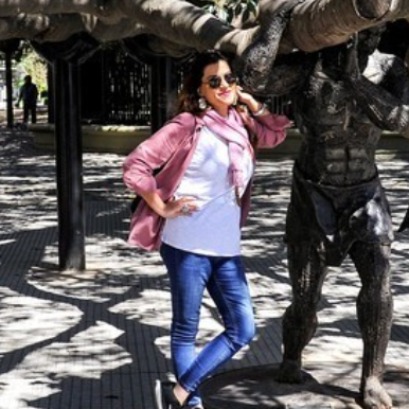
Among the thousands of trees that are part of the Buenos Aires landscape, there is one that stands out for its size, its age and the history it holds. The Gomero of Recoleta. Located in one of the most emblematic neighborhoods of the City of Buenos Aires, this specimen became a true botanical rarity. To find it you have to go to the “Juan XXIII” square, right in front of the historic Basilica del Pilar, one of the oldest religious buildings in the city. There, the rubber tree imposes itself with a presence that contrasts with the current urban environment. A tree that was born before the modernization of Buenos Aires. According to historical records and stories transmitted over time, the rubber tree would have been planted in 1781, towards the end of the 18th century, which would make it one of the oldest trees in the City of Buenos Aires and according to botanical estimates the age of this specimen would be 244 years. Its origin dates back to India and its Its arrival in the Río de la Plata was linked to the Altoaguirre family, owner of a farm that occupied a good part of this area when the city was still mostly rural. Over the years, the farm gave rise to streets, avenues, buildings and businesses, but the tree managed to survive all the transformations. Not only did it remain in its original location, but it continued to grow until reaching impressive dimensions with branches that extend more than 30 meters, a trunk several meters in diameter and branches as thick as an average tree. Since 2014, its extensive branches have found support in “Atlas”, the sculpture created by Joaquín Arbiza Brianza from auto parts. More than two meters high and weighing 250 kilos, the figure not only supports part of its structure, but also provides a symbolic dimension that fuses nature and art. Botanical characteristics of the Recoleta gum treeThe Ficus macrophylla, popularly known as gum tree, is a tree belonging to the Moraceae family. Of imposing bearing, it reaches about 18 meters in height and sports a robust trunk of around 7 meters in diameter, from which branches emerge that can extend up to 30 meters and exceed a meter in thickness. Its foliage is made up of simple, leathery leaves, dark green on the surface and reddish on the underside. It has diclino-monoecious flowers grouped in whitish-yellow inflorescences, and during the summer and autumn it produces small globose purple fruits, typical of sycones, supported by long peduncles with two characteristic bracts.