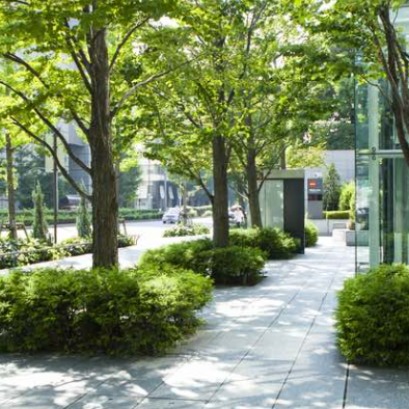
The trees that best cool cities: keys to planting against urban heat
Urban trees are not just an ornament: they are climate infrastructure. Some species cool more than others thanks to their shade and evapotranspiration. Researchers in Valencia identified which ones work best to reduce temperatures in urban environments and how their correct distribution can transform sweltering neighborhoods into liveable places.
The urban heat island phenomenon turns many Spanish cities into ovens during the summer. Asphalt, traffic and lack of vegetation raise nighttime temperatures, with direct consequences on health. The good news is that trees can be natural allies against this problem. But it is not enough to plant more: you have to choose carefully which species and where to place them to achieve true climate relief. Asphalt and cement absorb heat during the day and release it at night, keeping temperatures high. This phenomenon, combined with tall buildings and narrow streets – the “urban canyon effect” – increases the thermal difference with rural areas up to 8 ºC. The lack of vegetation amplifies the problem and multiplies tropical nights, those in which the temperature does not drop below 20 ºC.The cooling power of treesTrees reduce heat not only with shade, but also through evapotranspiration: a process that transfers moisture from the soil and leaves to the air, lowering the ambient temperature. However, the cooling capacity depends on the species, its crown density, the size of its leaves and its adaptation to the local climate. Most effective species in the Mediterranean A study in Valencia highlighted three key species:• Cinnamon (Melia azedarach): fast growing, large and dense leaves.• Chinese orange blossom (Pittosporum tobira): drought resistant, compact crown for narrow streets.•Common elm (Ulmus minor): large canopy and creation of microclimates, although vulnerable to graphiosis. These species adapt to the Mediterranean climate and show great shading capacity. However, only the elm is native, which reminds us of the need to prioritize local species to avoid ecological risks. More trees, better distributed The problem is not only quantity, but location. Trees are usually concentrated in parks or avenues, while vulnerable neighborhoods lack sufficient trees. Planning involves selecting adapted species, placing them in critical areas and linking the trees to a network of green infrastructure that connects streets, squares and parks. Planting is planning against the heatUrban trees provide multiple benefits: it reduces temperature, improves air quality, increases biodiversity and reduces energy consumption by limiting the use of air conditioning. Planting the right trees in the right places can make the difference between a suffocating city and a resilient city, more livable in the face of climate change.
IT MAY INTEREST YOU
 The discovery of methane-producing bacteria in trees rethinks the ecological role of forests
Pioneering study shows trees surprising internal microbial diversity and potential influence on global climate, driving novel strategies for agricultural and forestry management
 Free seminar on the implementation of the European EUDR regulation on deforestation-free wood products
The Argentine Forestry Association (AFoA) organizes the seminar «EUDR in Forest Products: Current status of implementation. Regulatory requirements and private experiences", which will take place on Wednesday, November 26, from 11:00 a.m. to 12:00 p.m., via Zoom, with live streaming on YouTube. The European Regulation on Deforestation-Free Products (EUDR) will enter into force on December 31, 2025 and will impose new requirements for forest products entering the European Union market.
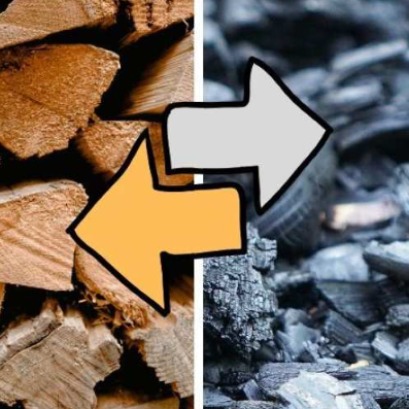 Canadian researchers make biochar from wood waste that rivals steel in strength
Researchers at the University of Toronto have developed monolithic biochar from wood that can reach an axial hardness of up to 2.25 GPa, similar to mild steel.