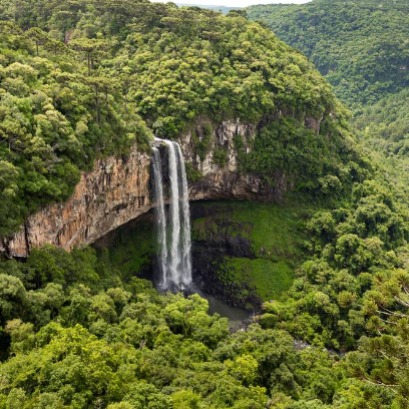
New global study, analyzing 100,000 trees, discovers that the diversity of species drives the growth of trees in wet climates
Biodiversity promotes trees growth, especially in humid climates. The study analyzed almost 100,000 trees of 130 species in 15 global forest experiments. Instead of studying forests as a whole, scientists observed each tree and their closest neighbors.
? More biodiversity, more growth ? Stronger effect in humid forests ? Constant benefit, even without extreme events ? Importance of species with different functional features ? Practical guide for effective forest restoration. Trees grow better when they have diverse neighbors, especially in humid forests Biodiversity has multiple ecological benefits. A greater variety of species helps create more resilient ecosystems against pests, diseases and climate change. But so far, it was not clear how much diversity it is necessary and in what types of environments really make the difference. A global research led by the University of Mistchigan has provided concrete answers. The study reveals that the diversity of tree species is especially crucial in wet areas. This conclusion can change the way in which reforestation and forest management strategies are addressed worldwide.zoom to the tree, not to the forest the team analyzed 15 long -term forest experiments in different continents, in collaboration with more than 30 scientific institutions. In total, almost 100,000 trees and 130 species were observed in a wide range of climates. The interesting thing was not only the scale, but the approach: each tree was studied individually along with its closest neighbors. Thus they achieved a much faster understanding of the interactions between species and its impact on growth. Diversity that drives growth, especially with humidity, the pattern was clear: trees in wet areas grew more when they were surrounded by different species. On the other hand, in drier regions, the effect was weak or even non -existent. This not only applies to tropical jungles; It was also observed in wet temperate forests, such as those in the northern United States or central Europe. This finding reinforces the idea that it is not enough to plant many trees, but must be different from each other, especially in places with good water availability. The key is in functional features, it is only the number of species. The benefits also come from the combination of different functional features, such as the density of the wood or the specific foliar area. These features determine how species share light, nutrients and space. For example, wide cup species can better coexist with other small leaves or with roots that explore different depths. This type of ecological complementarity is what drives a more efficient and sustainable growth of the whole. Useful Biodiversity ... but not in extreme conditions a result that surprised scientists was that diversity did not offer additional benefits for extreme climatic years. Unlike what was thought, biodiversity does not necessarily act as a safety network against droughts or heat waves. Rather, it enhances growth under medium climatic conditions, which are the most frequent. This does not reduce its value, but it changes the way it should be integrated into forest management policies: not as a shield against the disaster, but as a constant engine of productivity. A management tool with real impact of the study trees were relatively young (between 4 and 14 years), the results offer a solid base to make concrete decisions. The diversity of arboreal neighbors not only improves the individual performance of the trees, but can climb their benefits at the landscape level. In the current context of climate crisis and degradation of ecosystems, incorporating diversity as a technical criterion in restoration projects is urgent and viable. Some programs are already doing it: for example, in China and Costa Rica reforestation initiatives have been implemented that prioritize complementary native species, with promising results in terms of carbon capture and soil regeneration. Ingorporate this approach implies a change of mentality: plantar with intention, not only with volume. To restore what the planet needs, it is not enough to reverge, you have to do it with ecological intelligence. And diversity, well understood and applied, is one of the most powerful keys to achieve it.
IT MAY INTEREST YOU
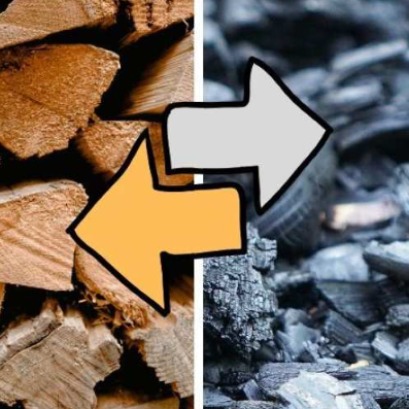 Canadian researchers make biochar from wood waste that rivals steel in strength
Researchers at the University of Toronto have developed monolithic biochar from wood that can reach an axial hardness of up to 2.25 GPa, similar to mild steel.
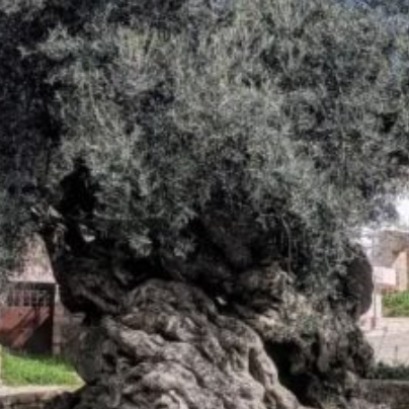 Experts cant believe it, but this tree is the oldest in the world and continues to bear fruit: it is 4,000 years old.
Nature keeps secrets that defy the passage of time, and one of the most surprising examples is a tree that, approximately 4,000 years old, continues to bear fruit today. This specimen has become a symbol of resistance and longevity, capable of surviving climate changes, landscape transformations and human activity itself.
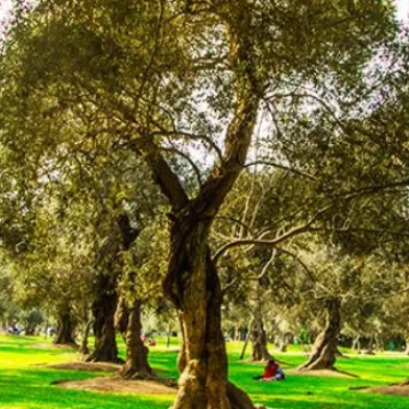 The city in South America that breathes thanks to a thousand olive trees planted in the 17th century
In the heart of South America there is a city that, among the noise and concrete, still breathes thanks to an olive forest