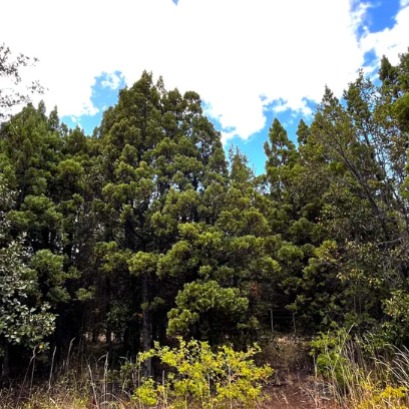
The silent, but vital work of dead wood in the forests of Patagonia
Dead wood, far from being waste, is vital in Patagonian forests. It favors regeneration, fertilizes soil and refuge fauna, according to Lanín Park. Your key role after fires
Far from being a simple waste, dead wood plays a fundamental and active role in the health and regeneration of Andean-Patagonic forests, as recently stood out from Lanín National Park. Fallen branches, stumps and trunks, both standing and demolished, are essential components for the natural functioning of these ecosystems. In forests, dead wood favors regeneration because when decomposing collaborates with soil fertility and improves water retention, they explained from the intention of the Lanín National Park. This natural process creates the optimal conditions so that new plants can grow, facilitating the life cycle of the life of the life of the life of the life of the life of the life Forest. In addition to its contribution to the ground, dead wood becomes a valuable refuge for a diversity of species. Since the role of that dead wood in the recovery of the forest is very important, since it will contribute nutrients to the burned soil and allow life to slowly return. Biodiversity, volcanoes, plains, mountains and lakes, connected by circuits and trails, including the emblematic Andean Footprint.
IT MAY INTEREST YOU
 Canadian researchers make biochar from wood waste that rivals steel in strength
Researchers at the University of Toronto have developed monolithic biochar from wood that can reach an axial hardness of up to 2.25 GPa, similar to mild steel.
 The forest of the oldest shadows: the story of the petrified trees
One of the natural treasures of Río Negro turns 23 years old under the protection law that allows its conservation. Where it is and how it was formed. Río Negro celebrates 23 years of conservation in the petrified forest as a Protected Natural Area (ANP). It is a space of 625 hectares that protects an exceptional site of fossil trunks that date back more than 60 million years.
 Missions | New illegal felling in the Piñalito Provincial Park in San Pedro reveals the silent expansion of deforestation in protected areas
The advance of deforestation on protected areas was once again evident this week in the Piñalito Sur Provincial Park, in San Pedro, where the Ministry of Ecology and Renewable Natural Resources confirmed a new case of selective illegal logging. The event occurs in a context of growing concern about the fragility of the environmental control system in rural and border areas, where the scarcity of resources, personnel and logistics limits the capacity of surveillance against criminal organizations organized to steal native woods and market them on the black market in connivance with sawmill owners.