The worlds largest tree forms a forest
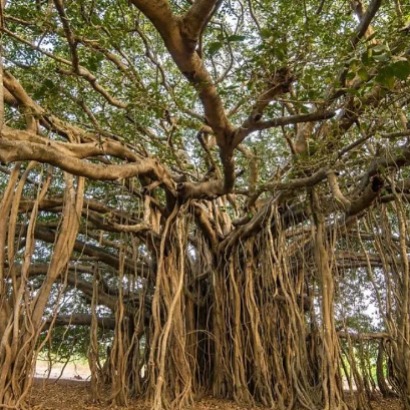
Trees are essential for planet Earth, one of them is characterized by being huge and forming its own forest.
The trees are essential, essentially purify the air and regulate the weather. The set of them form forests, these are responsible for maintaining the balance of nature, since they house much of the biodiversity of the planet Earth. A forest stands out in the world and not for its size, it only measures 19 square meters, but because it is composed of a single tree. This work of nature has become a enduring symbol of eternal life. We tell you where it is. The tree with the largest cup in the world: forms its own forest according to the Aquae Foundation in one of the most arid regions of India, Thimmamma Marrimanu, the tree with the largest cup in the world, blooms forming its own forest. This tree belongs to the so -called Banians or Higueras de Bengal (Ficus Benghalensis), an endemic species of Bangladés, India and Sri Lanka. This tree is characterized by its aerial roots and its wide canopy. These develop conventionally, their seeds grow in the cracks of the bark of other trees, so they grow unconventionally from top to bottom. With the passage of time devours to the tree that was its host. In different cultures it is a symbol of stability and growth. How is the forest composed of a tree? This tree has a glass that covers 19,107 square meters of surface, hence it seems Antiquity. The story tells that a woman named Thimmamma was immolated in the place in the fifteenth century, shortly after the death of her husband, a rite known as Sati in Hinduism. There the tree grew, especially revered by couples.
IT MAY INTEREST YOU
 The DNA of forests: they discover what makes a tree resist drought
An international team, with the participation of INTA and Conicet, discovered that genetics can be decisive for trees to better resist droughts
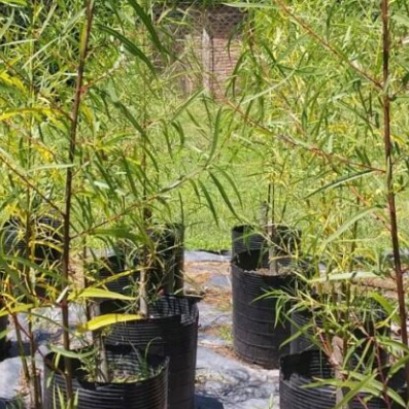 INTA Delta begins propagation of seven Creole willow clones for ecological restoration in Paraná
As a result of the rescue, domestication and registration work carried out by Teresa Cerrillo, a leading researcher in Salix Genetic Improvement, within the framework of the National Genetic and Forest Resources Programs of INTA, the multiplication and propagation of seven clones of Creole willow (Salix humboldtiana) began recently registered in the National Seed Institute (INASE) by INTA Delta del Paraná.
 Canadian researchers make biochar from wood waste that rivals steel in strength
Researchers at the University of Toronto have developed monolithic biochar from wood that can reach an axial hardness of up to 2.25 GPa, similar to mild steel.