The South America tree that is considered the strongest in the world and grows in desert zone
This South American tree is one of the strongest in the world and its fruit gives you many health benefits
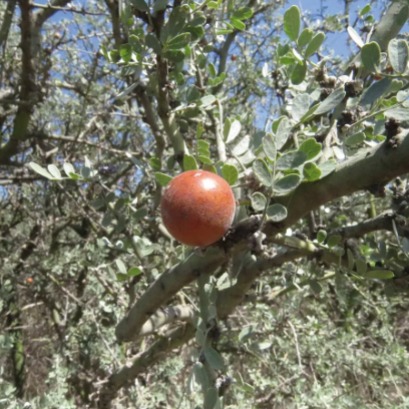
The vegetation of South America is not only wide, but is also beautiful. There is a tree that is calling attention worldwide, since it is not only considered the strongest in the world, but also grows in the desert. What a tree in South America stands out for being the strongest in the world? It is the chañar, which usually grows with abundance in desert areas, resists extreme temperatures and provides seeds and fruits that are edible. It grows in desert areas, and this leads to adapt to hard climatic conditions. This species receives little water, supports strong winds and survives even at extreme temperatures. For example, it has been shown that this species supports days of more than 40ºC, as well as cold nights, where the thermometer descends to -13ºC. Nature is wise, and that is why the chañar has branches full of thorns. Therefore, these trees can prevent certain animals from damaging it. The chañar grows in six countries in South America: Argentina, Chile, Bolivia, Paraguay, Uruguay and Peru. What benefits does the fruit of the chañar provide? The chañar has edible fruits and seeds, which can provide many benefits to our health. For example, in some villages, the fruit of the chañar is performed, which is used to overcome from a simple cold to bronchitis or a lung problem. To perform a branch you have to clean the fruits well and give a boil to soften the peel. Remove the peel and put the fruit again in the soft heat. You will have to stir from time to time so that it does not stick. The chañar will release a kind of ink, and at this point you have to remove the fruit of the fire. Then, it is advisable to grind the fruit in a mortar. Strain the pasta with a fine canvas or tulle along with the water with which the fruit was boiled. Put the liquid obtained from the cast over low heat, stirring constantly. When he has taken a thread point and has a brown color, he must remove from heat, and then package.
IT MAY INTEREST YOU
 Nation reinforces prevention and training against forest fires
The director of the Federal Emergency Agency (AFE), Santiago Hardie, referred to the support that the Nation provides in fighting fires. He argued that the majority of igneous sources respond to human interventions and that, therefore, social awareness is a central tool to reduce environmental, material and human damage.
 Canadian researchers make biochar from wood waste that rivals steel in strength
Researchers at the University of Toronto have developed monolithic biochar from wood that can reach an axial hardness of up to 2.25 GPa, similar to mild steel.
 The DNA of forests: they discover what makes a tree resist drought
An international team, with the participation of INTA and Conicet, discovered that genetics can be decisive for trees to better resist droughts