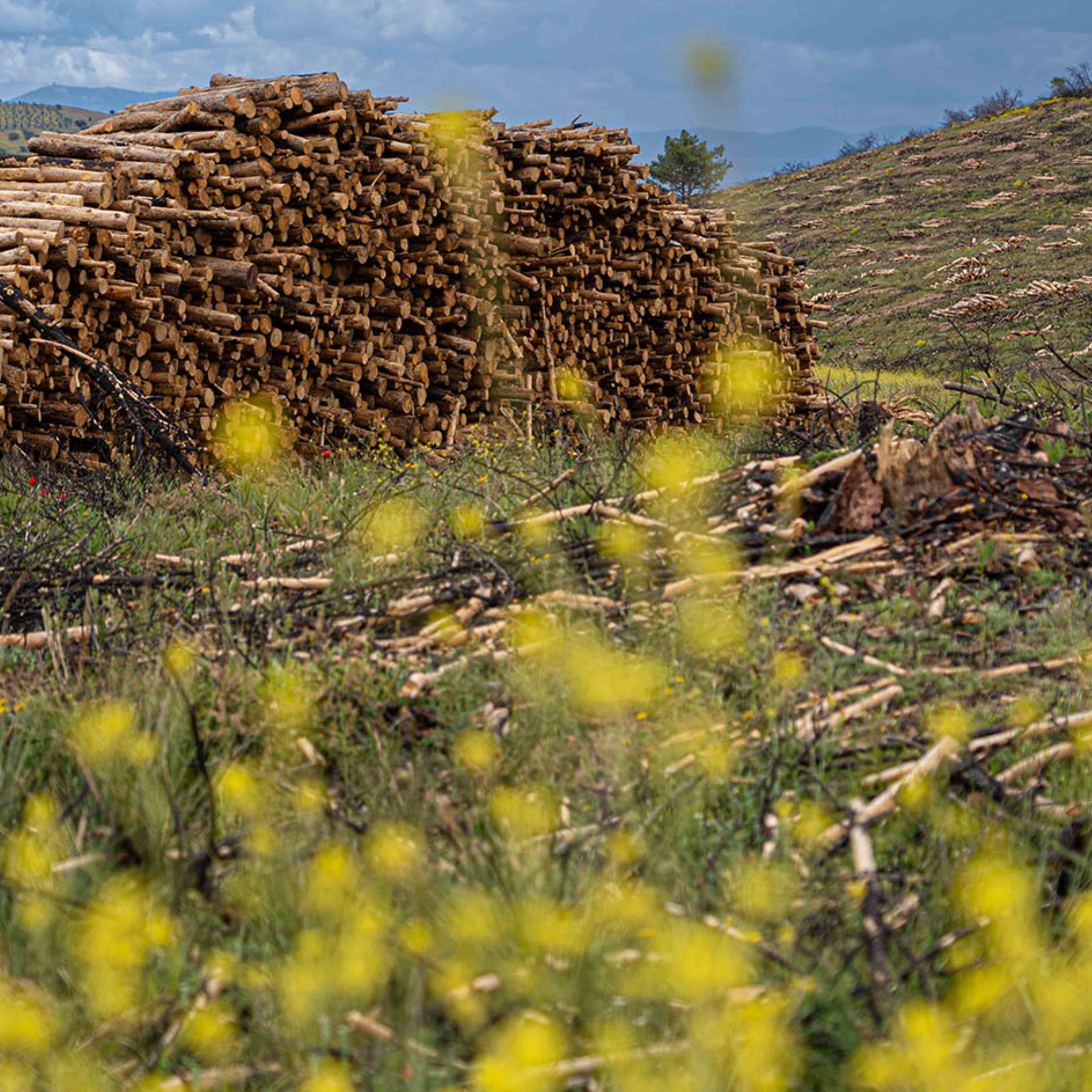
Is forest biomass the solution to avoid fires?
With the arrival of summer, we face the threat of forest fires. High temperatures, the state of forests or prolonged drought create the conducive conditions for the propagation of fire. Spain is the third country in Europe in total area affected by forest fires. According to data from the State Committee on Coordination and Emergency Directorate against Forest Fire (CECOD), in 2023 the total number of fires descended compared to the previous year, but increased hectares and the so -called forest fires increased, those that affect more than more than 500 hectares. In total, more than 89,000 hectares ended up affected.
Given this situation, the need to implement sustainable forest management arises that contemplates the conservation and maintenance of forests to prevent fires. Veolia, a leading decarbonization and circular economy company, is one of the main actors in the conservation and naturalization of forest spaces thanks to its subsidiary Veolia Biomasa. , the company carries out preservation actions such as controlled clarif. This technique reduces the density of trees per hectare, optimizing the forest mass and creating areas with lower plant fuel load, which facilitates the containment and control of the fire in case of fire. In addition, it reinforces the resilience of forests and their recovery ability. The province of Zamora, Ávila, Madrid, Albacete and Cuenca. which reinforces Veolias commitment to ecological transformation and circular economy. In this way we promote a sustainable and rational exploitation of forest resources, thus helping to promote the proximity economy and generating an economic benefit in rural areas, ?explains Miguel Ruíz-Galvez, director of Veolia Biomasa. > , Veolia Biomasa has the southern certification, a system that guarantees the traceability and origin of all the biomass produced and that, therefore, meets the strictest established sustainability requirements by the European Directive of Renewable Energies. This voluntary sustainability certification, developed by Redcert and Bioenergy Europe, ensures the environmental responsibility and sustainability of biomass managed by Veolia, allowing its customers to compensate for the emissions derived from their production processes.
IT MAY INTEREST YOU
 Missions | New illegal felling in the Piñalito Provincial Park in San Pedro reveals the silent expansion of deforestation in protected areas
The advance of deforestation on protected areas was once again evident this week in the Piñalito Sur Provincial Park, in San Pedro, where the Ministry of Ecology and Renewable Natural Resources confirmed a new case of selective illegal logging. The event occurs in a context of growing concern about the fragility of the environmental control system in rural and border areas, where the scarcity of resources, personnel and logistics limits the capacity of surveillance against criminal organizations organized to steal native woods and market them on the black market in connivance with sawmill owners.
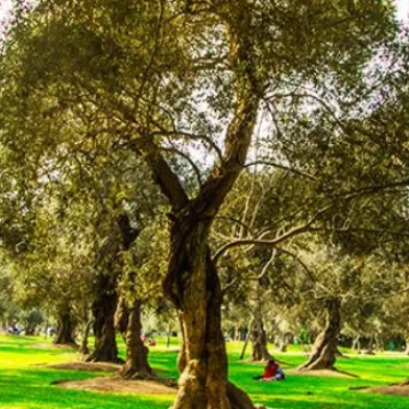 The city in South America that breathes thanks to a thousand olive trees planted in the 17th century
In the heart of South America there is a city that, among the noise and concrete, still breathes thanks to an olive forest
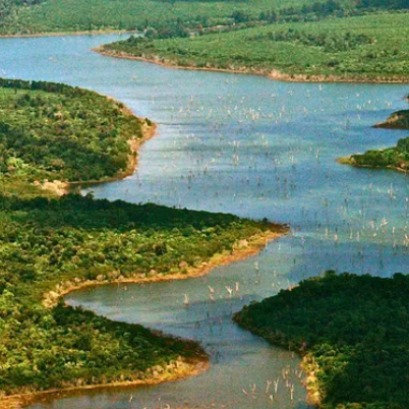 The second largest wetland in South America is located in Argentina: what is it?
Argentina has national parks that place it in a unique position within South America, competing with 300 others. Which is the largest? South America is home to more than 300 national parks, but many go unnoticed. There are extensive wetlands that have been the subject of major ecological restoration projects, to coastal mountains with deep indigenous heritage. Today we tell you the case of one located in Argentina.