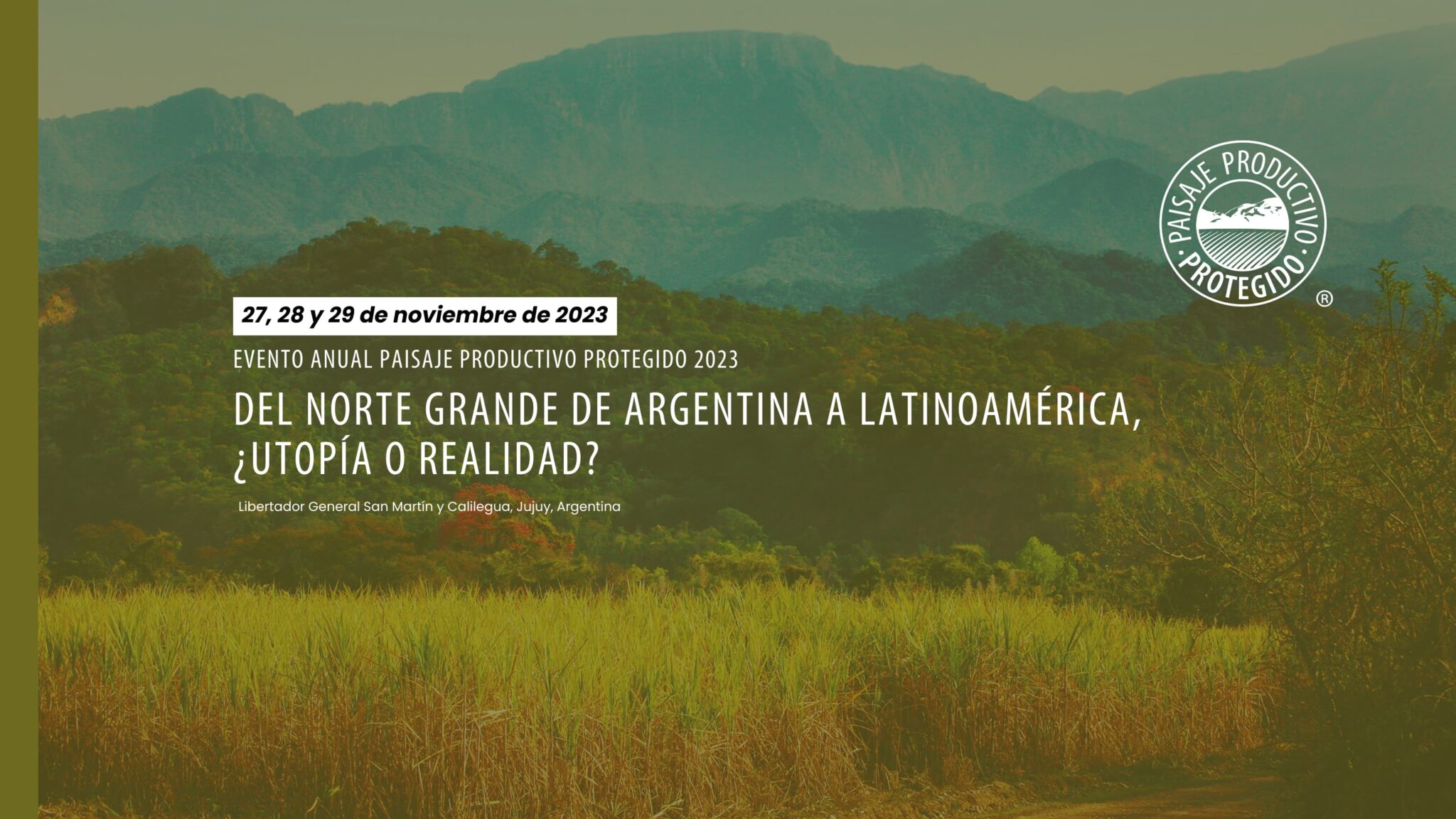
Production for conservation | The Annual Meeting of the Protected Productive Landscape Network of the region will be held in Jujuy
Organized by the ProYungas Foundation and the Ledesma company, the annual Red PPP meeting will take place between November 27 and 29 in Calilegua, Jujuy.
References from more than 35 companies, civil society organizations, environmental authorities, representatives of international cooperation, academics and technicians will meet to share good practices, achievements and continue promoting the growth of the Protected Productive Landscape Program (PPP) in the North Large from Argentina and neighboring countries.
The PPP, an initiative created by ProYungas in 2010, is a territory management model that seeks to coherently integrate the production and conservation of nature in environments of high environmental value. Today the program includes more than 30 companies from Argentina, Chile, Paraguay and Bolivia, with a total area of about 2.5 million hectares, of which more than 36% are natural areas.
The meeting is framed in the project "Protected Productive Landscape in the Great North of Argentina", executed by the ProYungas Foundation, together with the partner institutions FSC and Hábitat & Desarrollo, co-financed by the European Union.
Complete Event Program
Members of the PPP Network
Today the Program has a Network of companies and productive organizations that implement the PPP, partner organizations belonging to civil society and other institutions that support the implementation of the program, and strategic allies.
Companies and productive organizations: Ledesma, San Miguel, Citrusvil, Citromax, Arauco, Forestal Argentina, Bosques del Plata, Argenti Lemon, Vicente Trapani, Arcor, Romar, Suriyaco, Veracruz, Navar, Las Marías, Holcim, NOCE, Mistol Ancho, Agro Catamarca, Fortín Chacabuco, Quebracho Small Agricultural Producers Association (in Argentina); Arauco (in Chile); Neuland Cooperative, grouped ranchers from Estancia Santa Herminia, Estancia Doña Nidia, Estancia Tres Marías and Estancia 26 (in Paraguay) and; San Lorenzo (in Bolivia).
Partner organizations: ProYungas Foundation, The Nature Conservancy, Hábitat y Desarrollo Foundation (in Argentina); Moisés Bertoni Foundation, Wildlife Conservation Society (in Paraguay) and; Foundation for the Conservation of the Chiquitano Forest, PROMETA (in Bolivia).
Strategic allies: FSC Argentina, Argentine Association of Direct Sowing Producers (AAPRESID), Chaco Networks, UICN, Institute of Regional Ecology (CONICET-UNT), Institute of Subtropical Biology (CONICET-UNaM), Center for Territorial Environmental and Social Studies ( FCA, UNJu), Atlantic Forest Research Center, ALLCOT; Bolivia: FUNDESNAP.

IT MAY INTEREST YOU
 Free seminar on the implementation of the European EUDR regulation on deforestation-free wood products
The Argentine Forestry Association (AFoA) organizes the seminar «EUDR in Forest Products: Current status of implementation. Regulatory requirements and private experiences", which will take place on Wednesday, November 26, from 11:00 a.m. to 12:00 p.m., via Zoom, with live streaming on YouTube. The European Regulation on Deforestation-Free Products (EUDR) will enter into force on December 31, 2025 and will impose new requirements for forest products entering the European Union market.
 The forest of the oldest shadows: the story of the petrified trees
One of the natural treasures of Río Negro turns 23 years old under the protection law that allows its conservation. Where it is and how it was formed. Río Negro celebrates 23 years of conservation in the petrified forest as a Protected Natural Area (ANP). It is a space of 625 hectares that protects an exceptional site of fossil trunks that date back more than 60 million years.
 Missions | New illegal felling in the Piñalito Provincial Park in San Pedro reveals the silent expansion of deforestation in protected areas
The advance of deforestation on protected areas was once again evident this week in the Piñalito Sur Provincial Park, in San Pedro, where the Ministry of Ecology and Renewable Natural Resources confirmed a new case of selective illegal logging. The event occurs in a context of growing concern about the fragility of the environmental control system in rural and border areas, where the scarcity of resources, personnel and logistics limits the capacity of surveillance against criminal organizations organized to steal native woods and market them on the black market in connivance with sawmill owners.