Yakisugi: the Japanese technique that is all the rage in architecture and decoration
Also known as Shou-Sugi-Ban, this technique dates back to the 16th century and its name comes from “yaki” (burning) and “sugi” (cypress). Today linden, pine, maple or oak are usually used.
But the most innovative thing is that it can be applied to ceilings, walls and floors, and also to furniture and accessories of all kinds. The only limit? Own imagination.
What is the technique of "burning" wood?
The technique consists of burning or charring the wood. This, in addition to generating an original finish, contributes to a longer useful life.
A blowtorch or chimney is used to burn the surface of the board. The wood must be dry and cut into long boards.
Then it is quenched with water, allowed to cool and brushed for a better finish. Finally, the wood is protected with protector, natural oils, varnishes, etc.
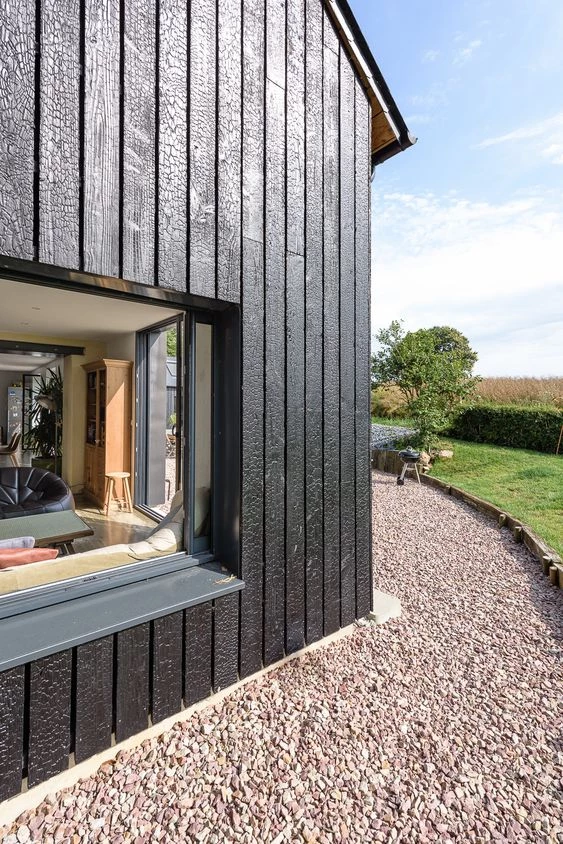
The slight carbonization of the wood surface makes it waterproof, flame retardant. It also protects it from the sun and works very effectively as an insect repellent. That is why this technique is an excellent option to use wood as an exterior coating.
Different uses and applications
• Floors, ceilings, walls and coverings.
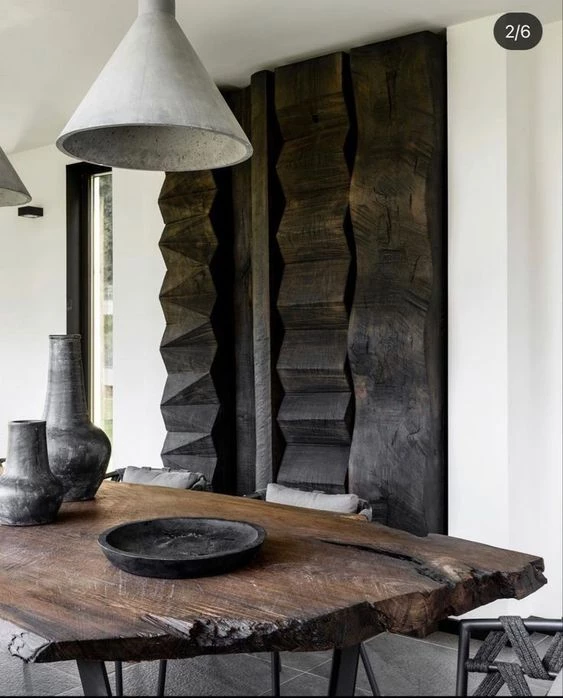
• Furniture.
• Accessories
In wall covering you can combine different shades of burning, opt for different placement methods, play with the geometry of the boards, sizes, etc.", says the specialist.
And she adds that it is also often used on tables, chairs and kitchen islands or to decorate any object: from centerpieces and fountains to decorations and pots. Almost anything goes!
The technique of burning wood, in addition to generating an original aesthetic effect, helps give it a longer useful life. It also provides a touch of nature while incorporating sophistication and elegance through the black color and the texture of the wood.

IT MAY INTEREST YOU
 The forest of the oldest shadows: the story of the petrified trees
One of the natural treasures of Río Negro turns 23 years old under the protection law that allows its conservation. Where it is and how it was formed. Río Negro celebrates 23 years of conservation in the petrified forest as a Protected Natural Area (ANP). It is a space of 625 hectares that protects an exceptional site of fossil trunks that date back more than 60 million years.
 The second largest wetland in South America is located in Argentina: what is it?
Argentina has national parks that place it in a unique position within South America, competing with 300 others. Which is the largest? South America is home to more than 300 national parks, but many go unnoticed. There are extensive wetlands that have been the subject of major ecological restoration projects, to coastal mountains with deep indigenous heritage. Today we tell you the case of one located in Argentina.
 The city in South America that breathes thanks to a thousand olive trees planted in the 17th century
In the heart of South America there is a city that, among the noise and concrete, still breathes thanks to an olive forest