
Neuquén: Patagonia International Congress, beyond Fire: Neuquén, Río Negro and Chubut to establish an Interprovincial Regional Table
The first International Congress “Patagonia, beyond fire”, held from October 27 to 29 on the premises of the Rural Society of Neuquén and organized by the Secretary of Emergencies and Irrigation Management of the provincial government, closed with a commitment between Neuquén, Río Negro and Chubut to form an Interprovincial Regional Table for the prevention and comprehensive management of rural, forest and interface fires in the Patagonian provinces. The meeting, organized by the Government of Neuquén, brought together more than 400 participants and specialists from Argentina, Chile, Canada and Spain, with the purpose of transforming the exchange of experiences into a cooperation agenda in the face of new fire scenarios in the region.
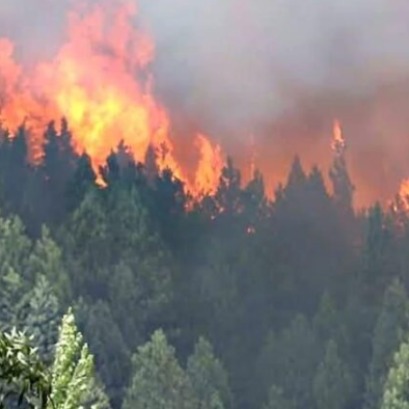
The signing of the minutes represents the main institutional result of the three days: establishing a permanent framework to strengthen governance, coordination between jurisdictions and technical cooperation in Patagonia. The challenge will be to sustain this commitment over time and translate it into prevention, preparation and response policies that protect people, communities and ecosystems. Regional table, with deadlines and work actions The principle of agreement was led by the Secretary of Emergencies and Risk Management of Neuquén, Luciana Ortiz Luna, along with representatives of the three provinces. The initiative contemplates the participation of the security forces, the National Parks Administration, the Federal Emergency Agency (AFE), the Provincial Fire Fighting Systems of the three provinces, and was open to the participation of representatives of the scientific and technological system, universities, municipalities, private sector, community organizations, indigenous peoples and civil society. Institutions and organizations that participated in the Congress also accompany this process, among them the Pau Costa Foundation, from Spain; the World Bank and the Federal Investment Council (CFI), which support the path initiated and will accompany the implementation process, with the aim of strengthening cooperation, training and financing aimed at prevention. The challenge is to sustain interprovincial public policies that allow reducing ignitions, exposure and vulnerability through coordination in the territory, fuel management and community participation, considering the ecological role of fire and the protection of life, property and ecosystems of Argentine Patagonia, he specified in the interview with ArgentinaForestal.com the environmental management specialist, Luis Sosa Pfatschaacher, technical manager of the Provincial Directorate of the Regional Delegations of Neuquén, who together with Alan Traballoni, director of Emergencies and Communications Southern Region, promoted the organization of the Congress. The dimension of shared work is also reflected in the human resources available. Together, the three provinces have about 600 forest brigade members, in addition to security forces specialized in combating rural and forest fires, volunteer firefighters, park rangers from the National Parks Administration, Defense and Civil Protection teams and emergency and risk management areas. In this sense, specific contributions from each province were identified to strengthen a regional strategy:• Neuquén: will share the experience of the Resilient Interface program, which contemplates neighborhood participation, risk assessment for homes, participatory cartography and the articulation between risk management organizations and communities.• Río Negro: will contribute the trajectory of the Provincial Forest Fire Fighting System, its experience in preventive education, fire hazard analysis, technical training and incorporation of technological tools for risk management.• Chubut: will share its experience in fuel management, preventive forestry and planning at the municipal and property scale, in addition to its capabilities in education for prevention, territorial organization and inter-institutional articulation. The minutes establish a period of 30 days for each province to designate an institutional reference and a technical liaison, with their respective substitutes. Within this period, a first meeting will be held and, subsequently, the meetings will be held on a quarterly basis. Decisions will be adopted by consensus and will be recorded in each work instance. A first meeting will be held within this period, and then every three months there will be meetings, with decisions by consensus and registration of each agreement achieved. The coordination of the Table will be rotating and will last for one year. The operational aspects of this modality will be defined during the first meeting of the new interprovincial space. The commitments made also included actions to promote exchange between technical areas, the holding of at least three regional training days, the exchange of instructors between provinces and the training of trainers. Likewise, it was proposed to strengthen and include personnel with experience in preparation and response tasks. Prevention will have a specific chapter during the first year of work. It is planned to develop a pilot project and an initial diagnosis, with interventions agreed upon together with municipalities, owners and communities involved. The intention is that the actions respond to the characteristics and needs of each territory, and are not limited to general planning.