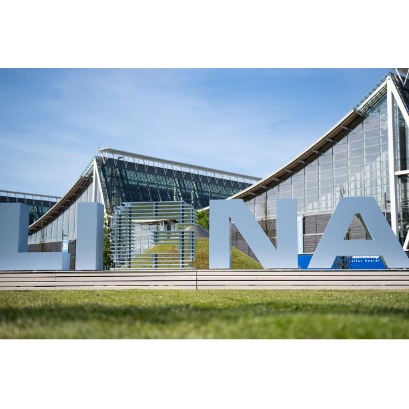
Asturias claims its potential to attract new projects linked to wood processing. The region has resources but also a business, industrial and technological ecosystem that was highlighted yesterday by twenty speakers in Madrid.
The agroindustrial sector is going through a transformation in which data and technology occupy an increasingly relevant place. However, having more information does not necessarily mean producing better, reducing costs or generating new businesses: the real leap in competitiveness begins when this data is integrated into processes and becomes decisions capable of generating results.
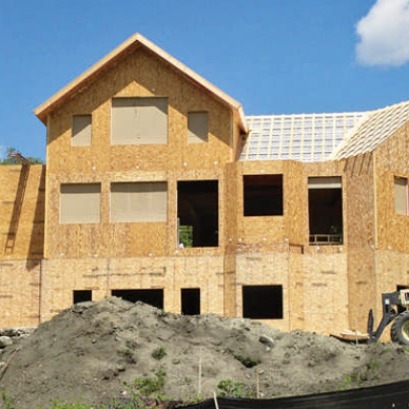
A 20-tonne load test has just turned a research concept into a tangible signal for the timber construction industry. Researchers at the University of Stuttgart tested a full-scale, 9 by 5 metre timber-concrete composite slab supported on columns and designed to span in two directions. The result is more than another structural component. It proposes a different way to design, manufacture and assemble floors for multi-storey buildings.
The meeting will be held on November 21 and 22 and will bring together brigade members, firefighters, forestry workers, specialists, technicians, researchers, organizations, producers and communities to address prevention, combat and recovery of areas affected by fire.
The introduction of this tree to the western US to combat river erosion backfired, displacing native species and disrupting fragile ecosystems. When talking about ecological restoration, planting trees often seems like one of the most obvious solutions to recover a degraded landscape. However, in fragile ecosystems, an intervention intended to help can end up generating new problems if the relationships between species, water and soil are not taken into account.
This tree was planted by millions in Spain and scientists now link it to the loss of biodiversity For decades it was the tree chosen to repopulate forests and supply the paper industry.
The Ministry of Production of Corrientes trained 120 forestry workers from the Garabí Group in Gobernador Virasoro, with the aim of strengthening knowledge and response capabilities against rural and forest fires.
Only three of the 22 native forest fragments studied on the coast of the Maule Region showed no signs of human intervention during the last four decades. The research, developed by specialists from the University of Chile and other institutions, combined field work with information from the Landsat satellite program and the GEDI sensor, two Earth observation tools developed with the participation of NASA, to reconstruct the history and structure of these ecosystems.