
Currents | They will give regional training on the management of CCF 4×4 tanker trucks for firefighting in Mocoretá
Mocoretá will host an important regional training on the handling of CCF 4×4 forestry trucks, which will bring together firefighters from different locations in Corrientes and will have the participation of an instructor from Mendoza. The CCF are units specially designed to intervene in rural and forest fires, with the capacity to travel through difficult terrain thanks to their 4×4 traction and characteristics adapted to work off conventional roads.
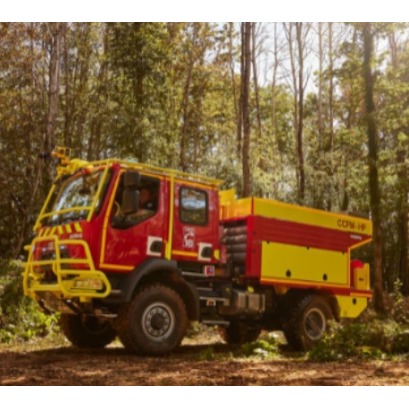
On this occasion, a special participation of a firefighter from Mocoretá stands out who will begin his training process as a SPAI instructor, under the supervision and evaluation of a specialist instructor from Mendoza, responsible for training on this type of vehicles in Argentina. SPAI is an entity made up of professional and volunteer firefighters based in France, whose international work includes specialized training, the exchange of knowledge and collaboration with firefighting institutions, including the provision of equipment and vehicles to strengthen their operational capabilities. SPAI has a history of working in Argentina for some time. several years. One of its main points of reference in the country is in Luján de Cuyo, Mendoza, where training and cooperation activities are carried out with barracks from different provinces. The organization has promoted training in different specialties, including rescue at height, intervention in collapsed structures, hazardous materials and forest fires. His career also includes collaboration with Argentine institutions through the provision of specialized vehicles and materials. The link with Mocoretá Firefighters In dialogue with the head of the active force, he explained that the approach to SPAI began almost two years ago and that, since then, the institution has been participating in different training and exchange instances. Among the background, a course held in Mocoretá two years ago and in Empedrado stood out, which lasted seven days and allowed the Mocoretá firefighters to learn up close about the organizations work methodology and establish contact with their instructors. Based on these experiences, the barracks continues to strengthen a relationship that represents an opportunity for institutional growth and access to new training tools. One of the axes of this work is training for the handling of CCF vehicles, an acronym that comes from the French Camion Citerne Feux de Forêts, whose translation is a tanker truck for forest fires. These vehicles have water tanks, pumping systems and specific equipment to fight fires in areas where conventional units may have difficulties to access. Due to their characteristics, they require trained drivers to recognize their possibilities and limitations, perform safe maneuvers and operate in different terrain conditions. In this context, on November 20, 21 and 22, the Volunteer Fire Station of Mocoretá will host a regional training on CCF 4×4 truck management. Troops from Monte Caseros, Curuzú Cuatiá, Bonpland and Mocoretá will participate, with an estimated call of around 15 firefighters and four units. On this occasion, a special participation of a firefighter from Mocoretá stands out who will begin his training process as a SPAI instructor, under the supervision and evaluation of a specialist instructor from Mendoza, responsible for training on this type of vehicles in Argentina. During the sessions they will work on safe driving, unit capabilities, movement through different land and preventive maintenance. At the end, participants will receive their corresponding certificates. For the Mocoretá barracks, this activity represents much more than a training event: it is a new opportunity to strengthen its relationship with an international organization with extensive experience and continue expanding the training and exchange spaces with other fire departments in the province. Ongoing training, the incorporation of specialized knowledge and the preparation of new instructors are fundamental aspects to improve the response capacity of those who work daily at the service of the community.