
What are vertical forests, where the most famous ones have been installed and what environmental benefits they generate
• Milan or Lausanne are some of the cities that host these structures that can absorb up to 30 tons of carbon dioxide per year and produce about 19 tons of pure oxygen
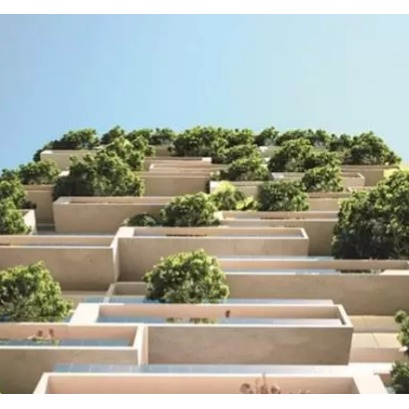
• Vertical forests emerge as an innovative response to the serious ecological imbalance that suffocates contemporary cities, where conventional structures dominate the urban landscape. This revolutionary architectural proposal, introduced for the first time by the Italian designer Stefano Boeri, represents a profound fusion between living nature and high-density buildings. By directly integrating forest elements into the structures of skyscrapers, the harmful effects of the growth of cities are mitigated, paving the way for a much more sustainable urbanism.• Technically, a vertical forest consists of a skyscraper entirely covered by vegetation, including trees, climbing plants, shrubs and wildflowers that grow integrated into the structure of the building itself. Unlike traditional glass facades, which reflect solar heat back to the streets and increase ground temperature, these buildings use flora as a protective envelope. The growth of roots and the stability of plant species are ensured by foundations and materials specially protected against natural erosion. Furthermore, the maintenance of this complex ecosystem is carried out in an automated manner using artificial irrigation and specialized personnel.• The most emblematic and pioneering example of this movement is found in Milan, Italy, where the residential complex known as Il Bosco Verticale was erected in the Isola neighborhood. Designed by the Boeri studio and completed in 2014, it consists of two imposing towers 110 and 76 meters high, respectively. This impressive work houses a total of 800 trees between three and nine meters high, along with eleven thousand plants and five thousand bushes that dress the facades of the homes. Altogether, the vegetation of this first metropolitan lung is equivalent to an entire hectare of natural forest, turning the residential building into a tourist enclave and a world reference.• The global expansion of this architectural trend has led to the construction of the extraordinary Nanjing Green Towers in the city of Nanjing, marking the birth of the first vertical forest in Asia. This monumental ecological project, also designed by Stefano Boeri, is made up of two large towers with heights of 200 meters and 108 meters, respectively. More than a thousand trees of 23 different native varieties have been planted on its large balconies, accompanied by thousands of shrubs and climbing plants that reduce surrounding pollution. It is estimated that these living structures are capable of absorbing about 25 tons of carbon dioxide annually, while releasing sixty kilograms of oxygen per day.• In addition to other notable examples, such as Madrid, Bogotá, Barcelona, ??Montevideo, Singapore or Paris, Switzerland has joined this group of cutting-edge forests with the Les Terrasses des Cèdres project, located in the city of Lausanne. This spectacular building, which reaches a height of 117 meters, has an impressive plantation of more than one hundred cedar trees of four different varieties, complemented by six thousand shrubs and some 18 thousand individual plants.• These plant terraces not only beautify the city landscape, but also demonstrate the technical feasibility of growing large species of trees at high altitudes in European climatic conditions. Among the multiple environmental benefits generated by vertical forests, the purification of the urban atmosphere is, without a doubt, one of the most significant and urgent contributions. The vegetation acts as a gigantic natural filter capable of capturing microscopic particles of dust in suspension and other harmful pollutants present in the air. Humidity and freshness These structures can absorb up to 30 tons of carbon dioxide per year and produce about 19 tons of pure oxygen. By generating oxygen and converting greenhouse gases, these masses of green concrete become active urban lungs that clean the environment for citizens. In addition to purifying the air, the massive presence of vegetation in skyscrapers favors the creation of local microclimates that thermally regulate the environment and reduce urban energy consumption. The leaves of the plants block direct solar radiation, acting as a thermal filter that significantly reduces the temperature inside the apartments and mitigates the need for air conditioning.• At the same time, trees and bushes function as highly efficient acoustic barriers that absorb noise from the streets, thus mitigating the constant noise pollution of metropolises. This combination of humidity and vegetal freshness makes highly densified areas more habitable. Finally, vertical forests return lost biodiversity to metropolitan areas by acting as natural habitats for dozens of species of birds, insects and small pollinating animals. Birds find in the branches of these buildings a safe haven to nest, actively integrating into a living ecosystem that grows far from the ground.•