Termites to save the tropical jungles of Australia: People thought it was enough with planting trees
They are essential for nutrient recycling and are associated with nitrogen -fixing bacteria, vital for the functioning of famous trees due to their ability to destroy wood, no one would think of recovering the tropical jungles planting termites nests. Well, precisely, because no one had occurred to him, some of Australias reforestation projects were sentenced to failure.
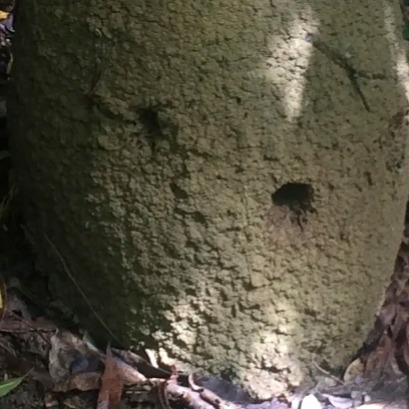
An investigation led by scientists from the Cary Institute for Ecosystems Studies, who has just published Journal of Appliad Ecology, suggests that the termites would be necessary for the remembered tropical jungles of Australia to prosper. Apparently, they are essential for nutrient recycling. That is, for the health of young forests. People thought that just planting trees was enough and it is not so, says Baptiste Wijas, postdoctoral researcher at the Cary Institute, and professor at the University of Queensland in Australia. Restored forests constitute a growing proportion of the total area of the tropical jungle. It is one of the best strategies that have occurred to us to preserve biodiversity and extract carbon from the atmosphere. Ramy Zanne, another scientist responsible for the project, wanted to discover the role and fungi such as decomposers in replanting forests. To do this, he placed wooden blocks in three wooded areas of a primary forest of the Tropical Selva for Daintree, in Australia, and waited. Originally they were low jungles until, around 1900, they became pineapple, banana and oil palm plantations, but then they were abandoned in the 2000s, before being replanted by the NGO Rainforest rescue in 2010 and 2014.During four years, the team reviewed the wooden blocks every six months to see if they had been invaded by fungi, termites or both, and both of them. with which the blocks broke down. Based on previous studies, the team hoped that the activity of the termites would be similar in the replanting forests and in the primary forests. The fungi appeared almost similarly both in the primary forests and in the reforested, but not the termites, which decomposed the wooden blocks with greater slowness in the reforested forests, even 12 years after the reforestation. A lower rate of decomposition can mean a return more slow carbon and nutrients to the ground, which could harm the health of the forest and future growth. To avoid these negative impacts, scientists propose dead trunks of primary forests in new forests, and thus attract decomposers from other areas. A young forest and in regeneration does not have much dead wood, Zanne explained. If you bring these trunks you are giving them food to keep them, while waiting for parts of the new trees to collapse. The team is now considering transplanting mounds of termites directly to the forests along with the dead wood. Although Wijas and Zanne recognize that it may be very difficult to convince forest administrators. It is known that about 3% of termites damage the houses, Zanne said, but very little is known from the remaining 97%. We believe that termites could be retaining carbon in their nests. When they eat wood, they cannot digest everything, so the feces they use to build their nests could be quite rich in carbon. They could even retain more than they emit, but we still dont know, Wijas points out. Termitas are also associated with nitrogen -fixing bacteria, vital for the growth and functioning of trees. Termites and fungi are absolutely essential for the functioning of the forest, and it would be interesting to see who returns to forests in regeneration if they are termites: perhaps ants, lizards and sugar petaurus, which feed on termites. At the moment, we simply have no idea if they are returning to these systems, says Zanne.
IT MAY INTEREST YOU
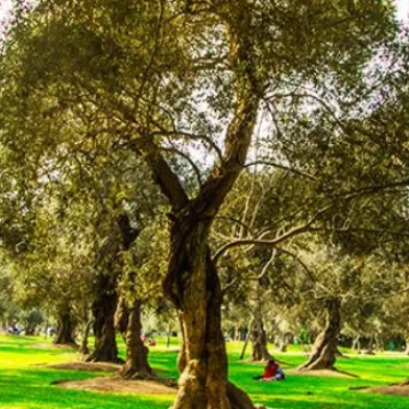 The city in South America that breathes thanks to a thousand olive trees planted in the 17th century
In the heart of South America there is a city that, among the noise and concrete, still breathes thanks to an olive forest
 Native forest | In Misiones, controls are tightened on routes for illegal transport of native wood, logging of forests without permits and fraudulent digital guides
Informality in forestry activity in Misiones was once again evident, the culture of operating illegally is a historical problem, and the Ministry of Ecology and Renewable Natural Resources carries out the corresponding control and inspection operations in the regulation of productive activity and sustainable management for the use of native forests.
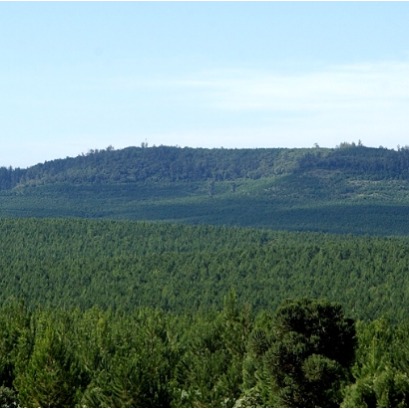 Free seminar on the implementation of the European EUDR regulation on deforestation-free wood products
The Argentine Forestry Association (AFoA) organizes the seminar «EUDR in Forest Products: Current status of implementation. Regulatory requirements and private experiences", which will take place on Wednesday, November 26, from 11:00 a.m. to 12:00 p.m., via Zoom, with live streaming on YouTube. The European Regulation on Deforestation-Free Products (EUDR) will enter into force on December 31, 2025 and will impose new requirements for forest products entering the European Union market.