Argentines, Brazilians and Uruguayans with a common goal: they verified that forest improvement with DNA studies can be accelerated and without the need to go to the field
The genetic improvement of animals and plants is a process as silent as extensive. Especially in the case of trees, which can take decades to express their characteristics and slow down the choice, a key step to obtain overcoming species. A recent study of INTA researchers, Conicet, Embrapa (Brazil) and UPM-Forestal Eastern (Uruguay) proposes a mechanism to accelerate it and make it less expensive.
Actually, they discovered that it is effective to apply genomic selection, already used in other fields, to forest improvement. That is to say, instead of delaying years in field observation to evaluate the growth and quality of the wood, DNA information can be used to make predictions and accelerate the selection process. The work entitled ?Genomic Selection in Forest Trees Comes to Life: Unraveling ITS Potential in An Advanced Four-generation, published in the magazine Frontiers in Plant Science, evaluates four generations of four generations of Eucalyptus grandis to see how likely it is to anticipate the growth in volume, the density of the wood and the performance of pulp only with genomic and phenotypic data of previous generations of the tree. This study highlights the enormous potential of the genomic selection to make more efficient the improvement of the trees, reducing costs, evaluation times, and allowing to select superior individuals with greater precision, said the researcher Eduardo Eduardo Eduardo Eduardo Eduardo Eduardo Eduardo Eduardo CAPPA, which belongs to INTA and CONICET. More than 34,000 trees with three -year growth data were evaluated, and the only one of the aspects that were difficult to estimate is volume growth. that these advances have for the forestry sector, since they can reduce or eliminate the long and expensive field tests, in which the offspring is evaluated.
IT MAY INTEREST YOU
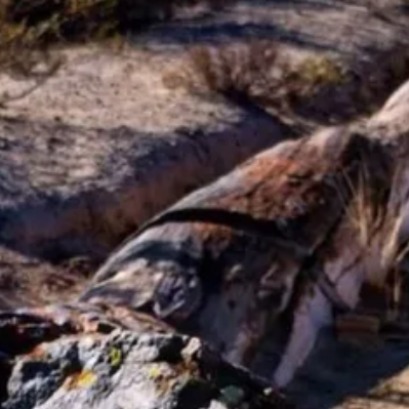 The forest of the oldest shadows: the story of the petrified trees
One of the natural treasures of Río Negro turns 23 years old under the protection law that allows its conservation. Where it is and how it was formed. Río Negro celebrates 23 years of conservation in the petrified forest as a Protected Natural Area (ANP). It is a space of 625 hectares that protects an exceptional site of fossil trunks that date back more than 60 million years.
 Native forest | In Misiones, controls are tightened on routes for illegal transport of native wood, logging of forests without permits and fraudulent digital guides
Informality in forestry activity in Misiones was once again evident, the culture of operating illegally is a historical problem, and the Ministry of Ecology and Renewable Natural Resources carries out the corresponding control and inspection operations in the regulation of productive activity and sustainable management for the use of native forests.
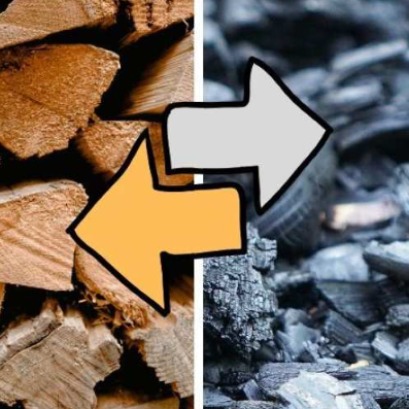 Canadian researchers make biochar from wood waste that rivals steel in strength
Researchers at the University of Toronto have developed monolithic biochar from wood that can reach an axial hardness of up to 2.25 GPa, similar to mild steel.