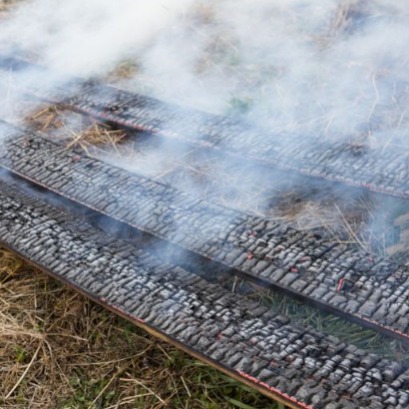
Burned wood: the Japanese technique that beautifies and protects the material
Elegant, ecological and resistant: the wood treated with the millenary technique called Yakisugi challenges the weather and the passage of time. In the world of design and construction, a Japanese ancestral technique is gaining prominence. This is the Yakisugi (also known as Shou Sugi Ban), a method that consists in burning the surface of the wood to make it more resistant and attractive. Although it may seem contradictory, exposing wood to fire gives natural protection against moisture, insects and deterioration over time.
This practice originated in Japan centuries ago and was mainly used in the construction of homes and temples. The traditional process implies burning the outer layer of the wood, brushing it to remove excess carbonization and, in some cases, apply natural oils to seal it. In this way, a wood with a unique texture and color is achieved, in addition to a greater longevity. Yakisugi has several advantages. First, it increases the durability of the wood, making it more moisture resistant and preventing it from rotting easily. In addition, repel -pests like termites and fungi, reducing the need for chemical treatments. Interestingly, it also improves its fire resistance: the burned layer acts as a barrier that retards combustion in case of fire. The application process can be performed in different ways. Traditionally, three tables are tied forming a tube and sets on fire, allowing a homogeneous burning. However, today more controlled methods, such as gas torch or even industrial ovens are used. The result is a dark, elegant wood and with a texture that highlights its natural veins. For this reason, it has become popular in contemporary architecture, especially in facades, coatings and furniture. In addition, by not requiring toxic products for maintenance, it is a sustainable option for those who seek ecological and low environmental impact materials. Despite being an millenary technique, the Yakisugi is still in force and reinvents itself in modern design. Its combination of beauty and functionality makes it an attractive option for both architects and interior designers. Thus, the fire, instead of destroying, becomes the best ally of wood.
IT MAY INTEREST YOU
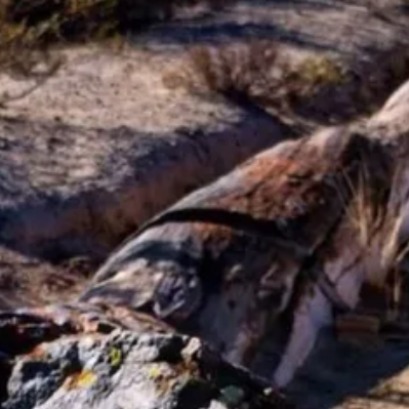 The forest of the oldest shadows: the story of the petrified trees
One of the natural treasures of Río Negro turns 23 years old under the protection law that allows its conservation. Where it is and how it was formed. Río Negro celebrates 23 years of conservation in the petrified forest as a Protected Natural Area (ANP). It is a space of 625 hectares that protects an exceptional site of fossil trunks that date back more than 60 million years.
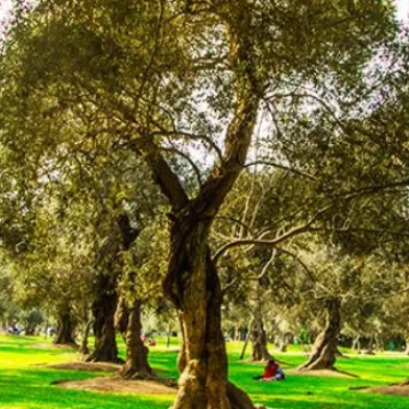 The city in South America that breathes thanks to a thousand olive trees planted in the 17th century
In the heart of South America there is a city that, among the noise and concrete, still breathes thanks to an olive forest
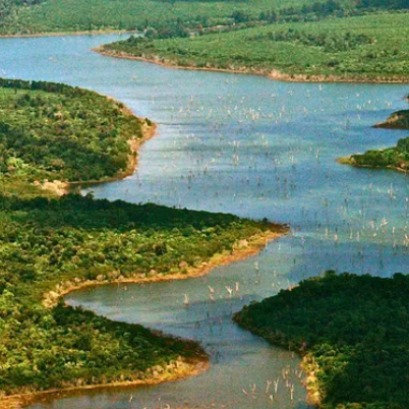 The second largest wetland in South America is located in Argentina: what is it?
Argentina has national parks that place it in a unique position within South America, competing with 300 others. Which is the largest? South America is home to more than 300 national parks, but many go unnoticed. There are extensive wetlands that have been the subject of major ecological restoration projects, to coastal mountains with deep indigenous heritage. Today we tell you the case of one located in Argentina.